
MECHDAM Working Gloves Manufacturing Capabilities
MECHDAM has a normal production capacity of 2500 pairs per working day and approximately 50000 pairs per month. Actual output varies by glove construction, material availability, size range, custom TPR/PVC tooling, testing requirements, and packaging complexity.
|
|
|
|
Production Capacity |
2500 pairs/day | 50,000 pairs/month |
|
Production Setup |
100+ stitching machines | 8 cutting presses |
|
In-House CNC Tooling |
8 CNC machines for custom TPR/PVC mould development |
|
Factory Team |
200+ people, including 20 QC personnel |
|
Typical MOQ |
From 300 pairs per style; construction-dependent |
|
Sampling |
About 7–10 working days after specifications and materials are confirmed |
|
Bulk Lead Time |
Typically 30–40 days after sample approval and order confirmation |

Why an End-to-End Controlled Manufacturing Process Matters
For commercial glove buyers, supply chain predictability and product consistency are vital. Inconsistent material thickness, seam failure, or improper size grading can result in distributor returns and site safety issues.
-
Dimensional Consistency: Standardized CAD patterns and physical dies ensure uniform fit across all global size ranges (Sizes 7 to 12).
-
Batch-to-Batch Material Parity: Strict incoming raw material checks prevent variations in leather thickness, fabric weight (GSM), or tensile strength.
-
Structural Durability: Reinforced seam placement, controlled thread tension, and stress-point bar-tacking prevent premature tear during heavy industrial use.
-
Private-Label Alignment: Every branding detail, barcode, polybag, and carton layout is verified prior to bulk production.
Why an End-to-End Controlled Manufacturing Process Matters
For commercial glove buyers, supply chain predictability and product consistency are vital. Inconsistent material thickness, seam failure, or improper size grading can result in distributor returns and site safety issues.
-
Dimensional Consistency: Standardized CAD patterns and physical dies ensure uniform fit across all global size ranges (Sizes 7 to 12).
-
Batch-to-Batch Material Parity: Strict incoming raw material checks prevent variations in leather thickness, fabric weight (GSM), or tensile strength.
-
Structural Durability: Reinforced seam placement, controlled thread tension, and stress-point bar-tacking prevent premature tear during heavy industrial use.
-
Private-Label Alignment: Every branding detail, barcode, polybag, and carton layout is verified prior to bulk production.


Built Around Your Specifications: Complete OEM & Private Label Flexibility
We adapt our manufacturing process to meet your specific technical and branding requirements. Whether you require heavy-duty split cowhide leather gloves, high-dexterity synthetic assembly gloves, or TPR-reinforced impact safety gloves, custom manufacturing starts before bulk production begins.
B2B clients can provide:
-
Technical Drawings & Spec Sheets: Detailed dimensional tolerances, material callouts, and seam requirements.
-
Physical Reference Samples: Reverse-engineering capability based on your existing market-proven glove designs.
-
Custom Material & Color Specifications: Custom leather tannage, specific fabric pantones, and specialized linings.
-
Branding & Packaging Files: Vector artwork for screen printing, rubber badges, woven labels, header cards, and retail polybags.


Step-by-Step Work Glove Manufacturing Process
Phase 1 — RFQ, Engineering & Sourcing
Step 1: RFQ & Commercial Inquiry Intake
The process begins when an importer, distributor, or OEM brand submits a Request for Quotation (RFQ). Our team reviews key commercial parameters including required glove types, estimated order quantities, target markets, compliance needs, and shipping terms (FOB, CIF, Ex-Works).


Step 2: Technical Assessment & Specification Review
Our technical specialists evaluate the proposed glove construction. We assess intended applications (e.g., construction, welding, logistics), palm and back-of-hand materials, lining choices, dexterity requirements, seam structures, and cuff styles. Reviewing technical feasibility upfront prevents production bottlenecks and ensures price accuracy.


Step 3: Pre-Production Sampling & Design Sign-Off
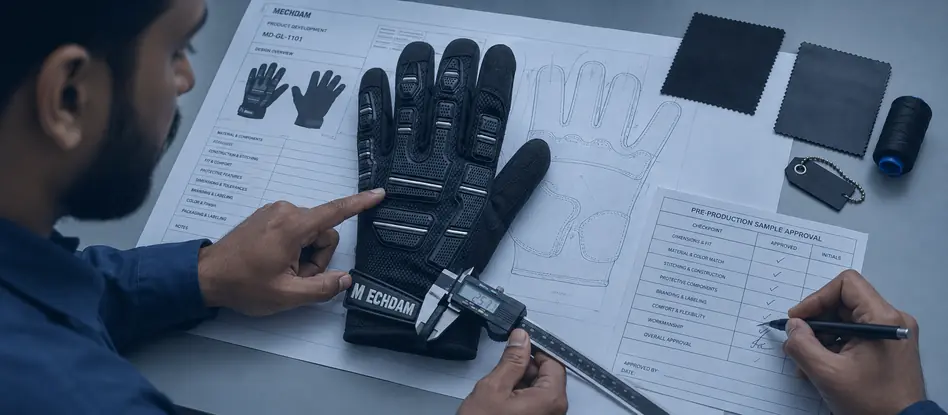
Before committing to bulk manufacturing, we develop physical pre-production samples based on confirmed specifications. The customer evaluates sample fit, material texture, flexibility, seam integrity, and branding accuracy. Production begins only after receiving formal physical or digital sample sign-off.

Step 4: Raw Material Planning & Procurement
Once the sample is approved, raw materials are allocated or procured. Depending on the design, materials may include grain or split cowhide/goatskin/buffalo leather, synthetic leather (Clarino/PU), high-GSM cotton canvas, spandex, cut-resistant yarns, thermal linings, elastic bands, and heavy-duty bonded threads.
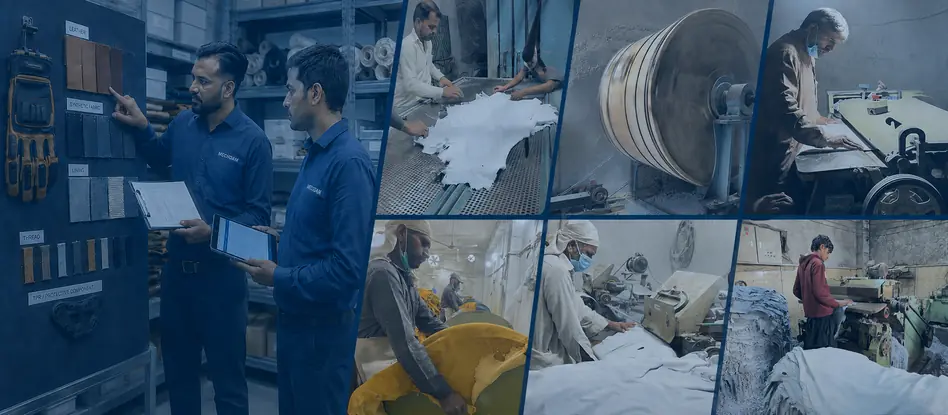

Step 5: Incoming Material Quality Control (IQC)
Raw materials undergo physical inspection upon arrival at our facility:
-
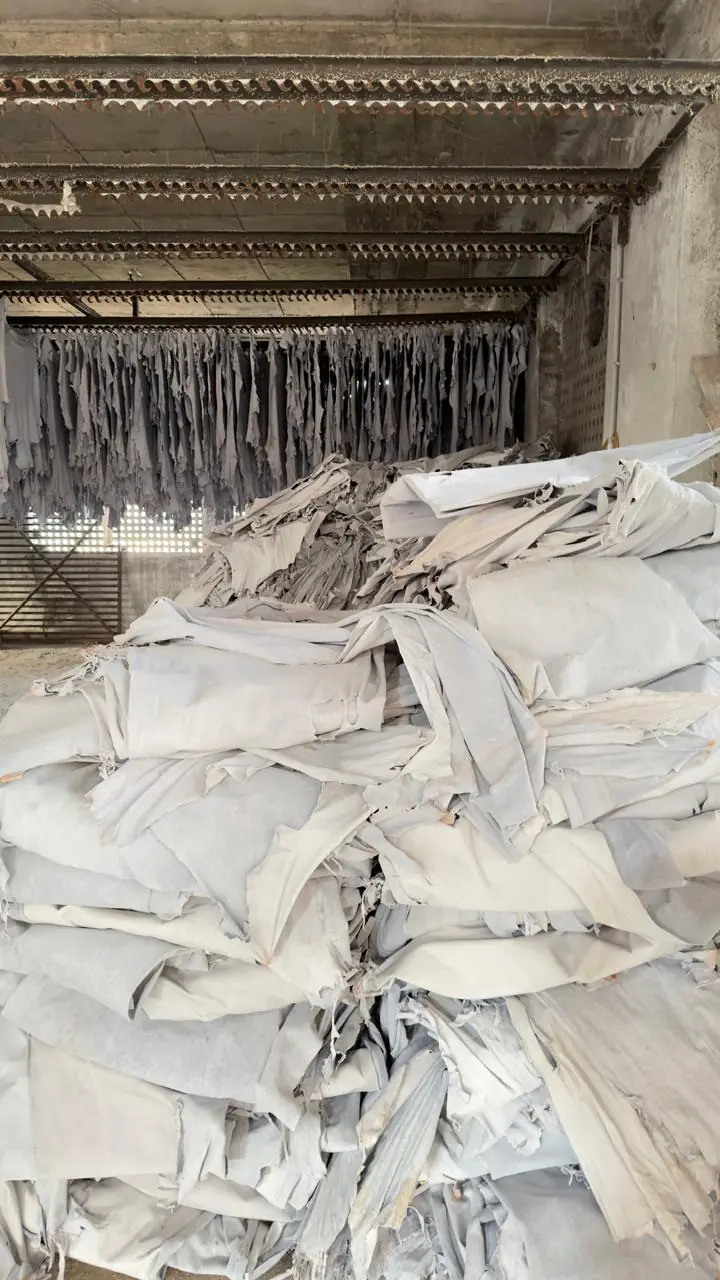
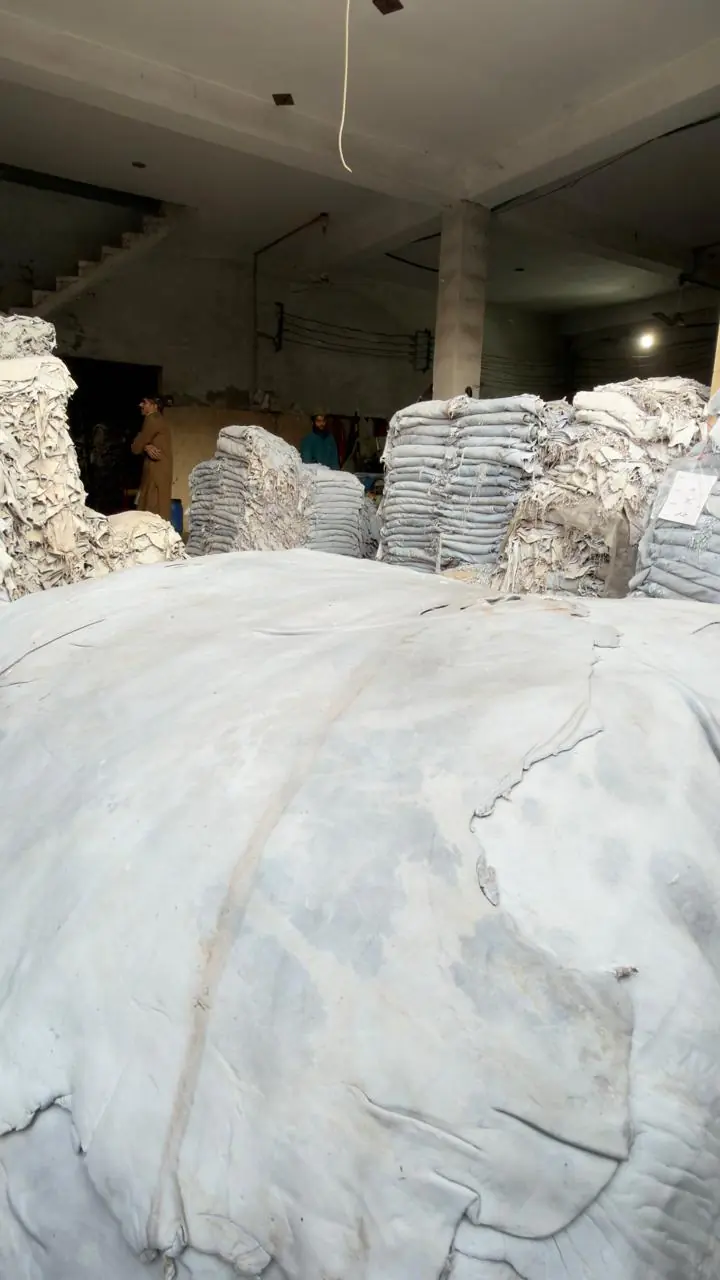
Leather Inspection: Hides are inspected for uniform thickness (mm), grain quality, softness, surface defects, and chrome/vegetable finish.
-
Textile & Synthetic Inspection: Fabrics are verified for weight (GSM), weave density, color uniformity, stretch recovery, and abrasion resistance.
-
Trims & Thread: Thread tensile strength, elastic memory, and hook-and-loop closure durability are verified.


Phase 2 — Preparation, Cutting & Component Fabrication
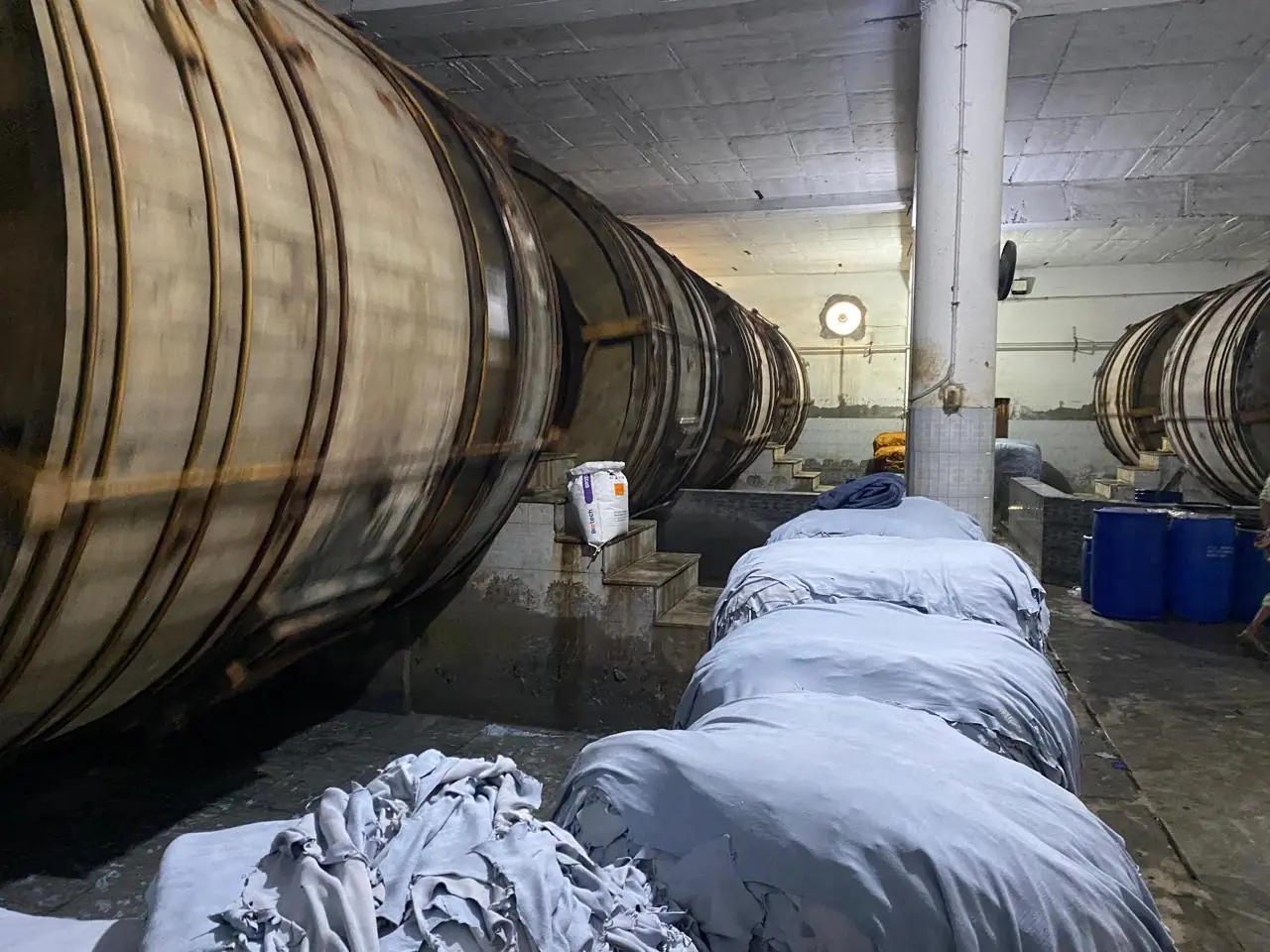
Step 6: Leather Preparation & Fabric Finishing (Product Dependent)
When specialized colors or finishes are required, leathers and fabrics undergo dyeing or surface treatment. Leather hides are selected for color uniformity, softness, and moisture control. Fabrics are dyed using color-fast dyes matching approved customer pantones.


Step 7: Pattern Development, Size Grading & CAD Layout
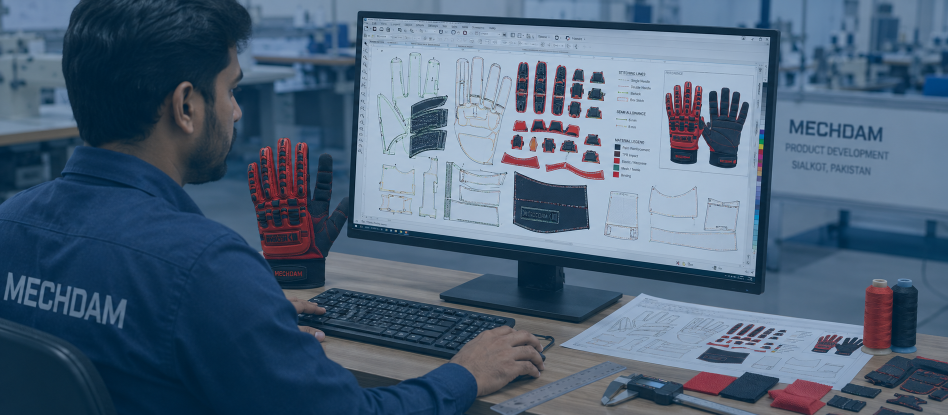
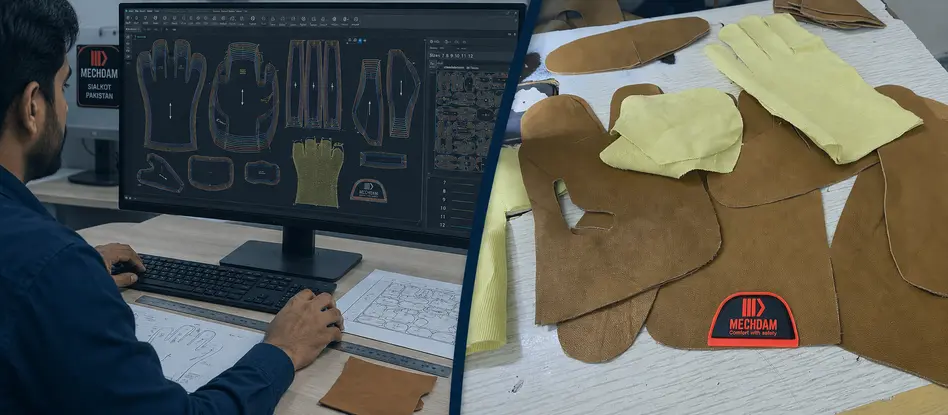
Our pattern makers create standardized cutting dies and templates for each size. Precise size grading ensures that proportions—finger length, palm width, thumb angle, and cuff length—remain anatomically accurate across small to extra-large sizes.

Step 8: Precision Material Cutting
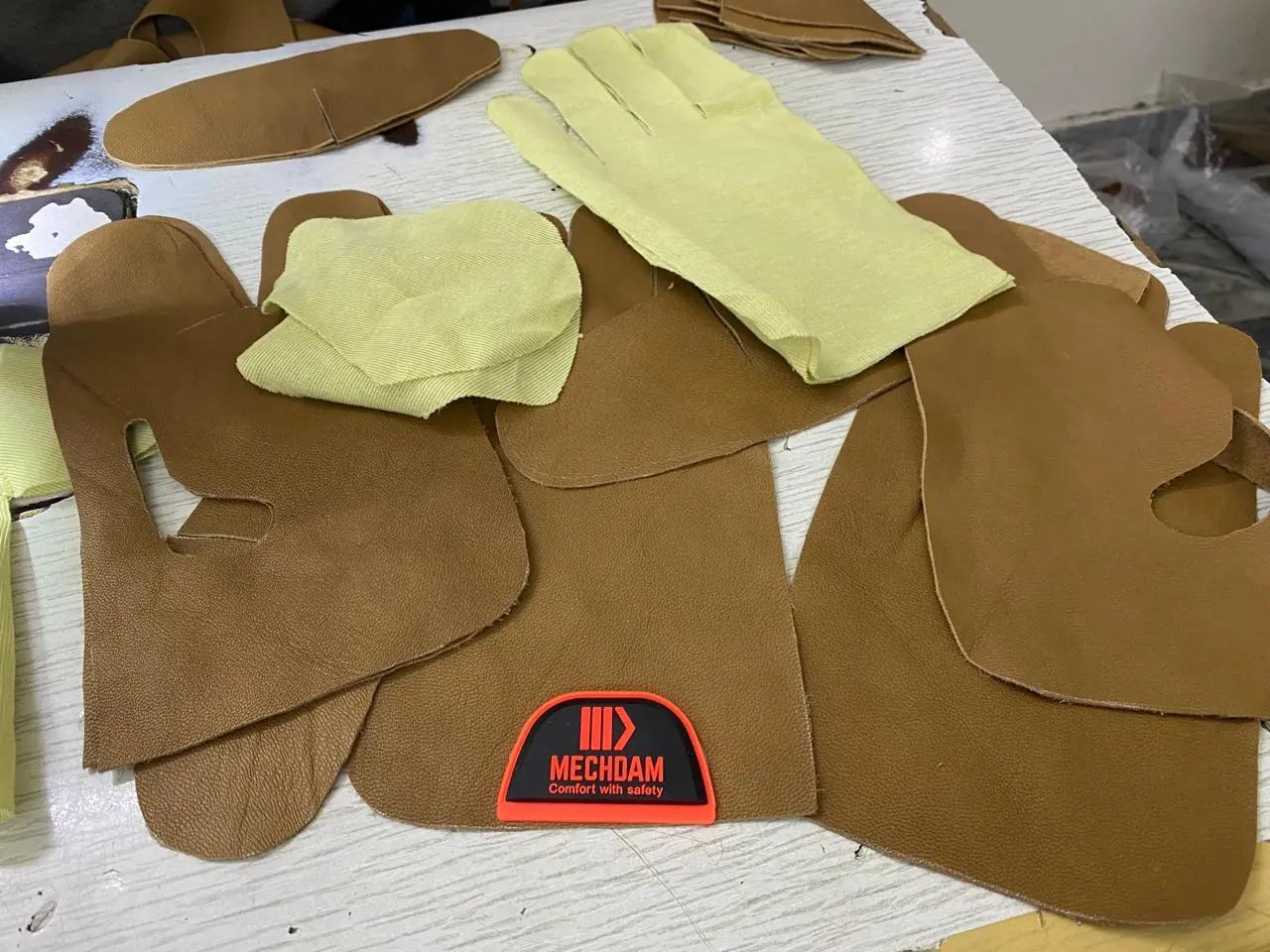
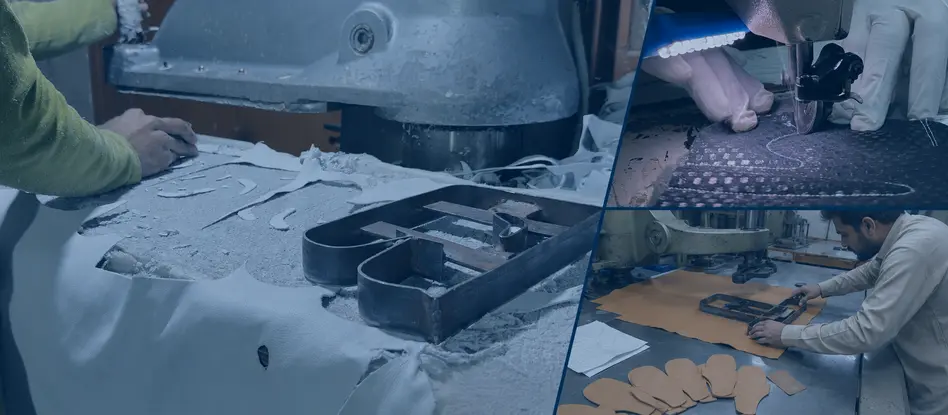
Materials are cut into individual glove components (palms, backs, fingers/fourchettes, thumbs, gussets, and cuffs). Cutting is executed using hydraulic clicker presses and precision die-cutters to maintain clean edges, dimensional consistency, and optimal material yield.
Hydraulic Clicker Press / Cutting Dies
Cut Components Produced:
- Palms & Backs
- Fourchettes (Finger Sides)
- Thumb Pieces & Cuffs

Step 9: Tooling, CNC Moulding & Protective Component Fabrication (Product Dependent)
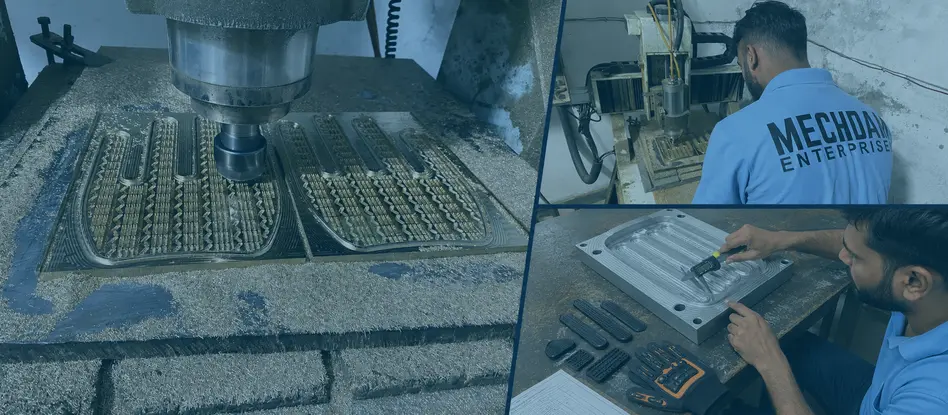
For impact-resistant safety gloves featuring Thermoplastic Rubber (TPR) or custom PVC elements, custom tooling and CNC-machined moulds are produced based on technical drawings. Molten resin is injected into the moulds to create flexible back-of-hand and finger protection pads.

Step 10: Component Inspection & Preparation (TPR / PVC Checks)
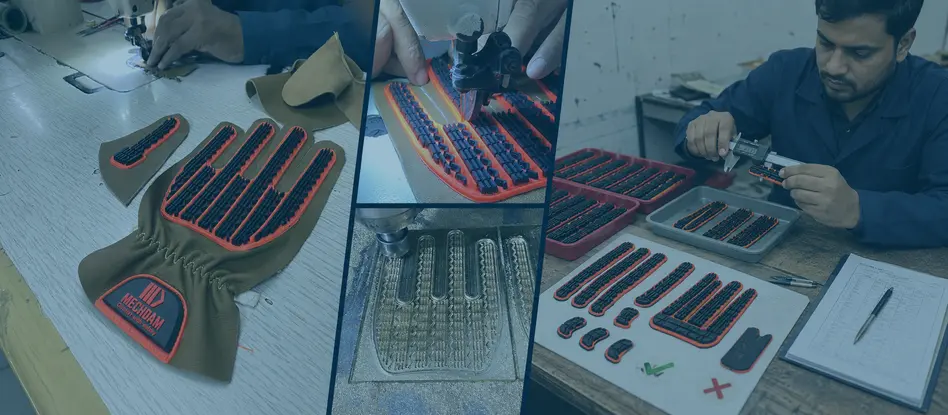
Moulded protective components undergo dimensional, flex, and surface inspection. Inspectors check TPR pads for proper Shore A hardness, smooth edges, uniform color, and structural flexibility.

Step 11: Branding, Screen Printing & Thermal Transfer
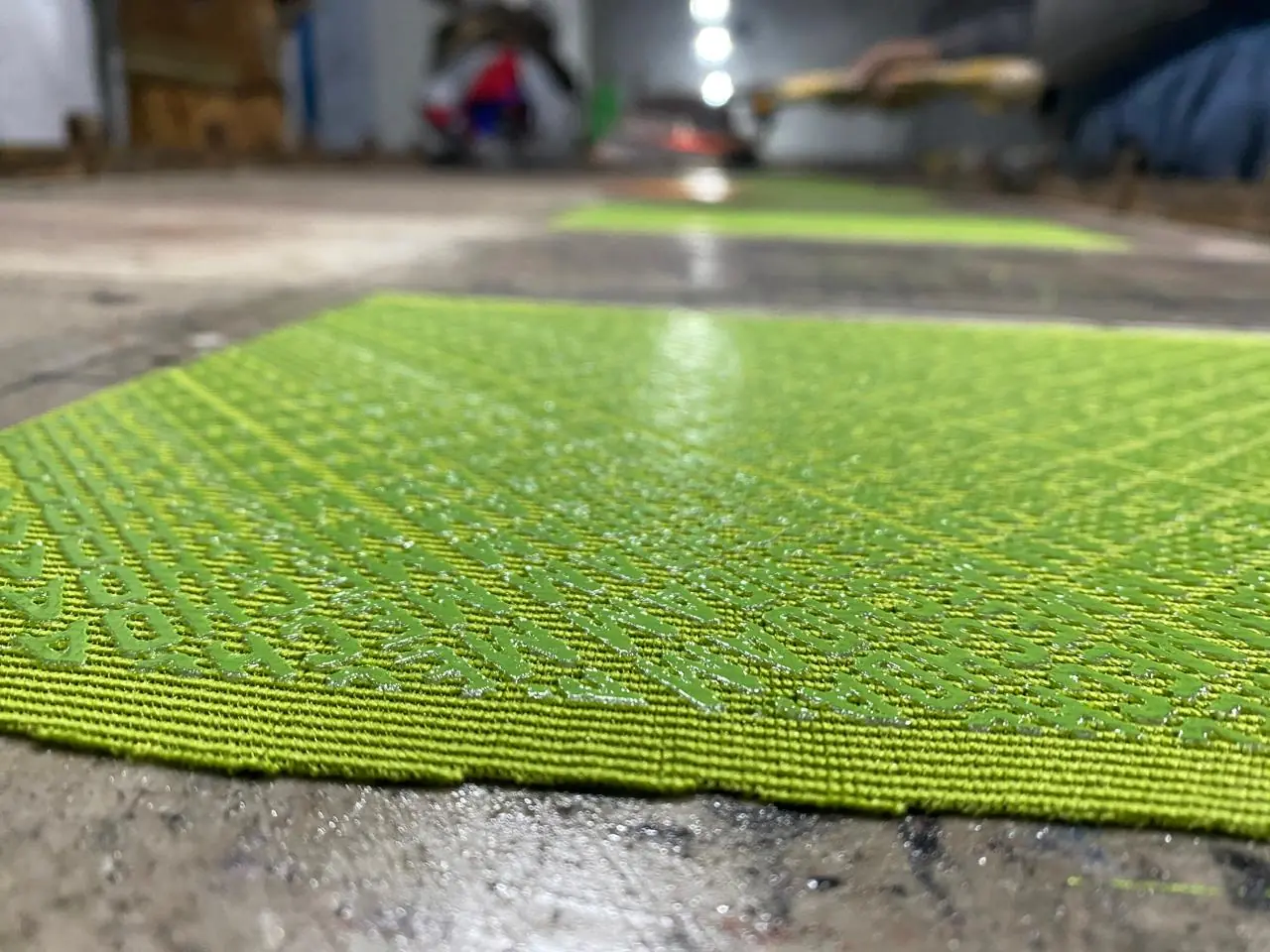
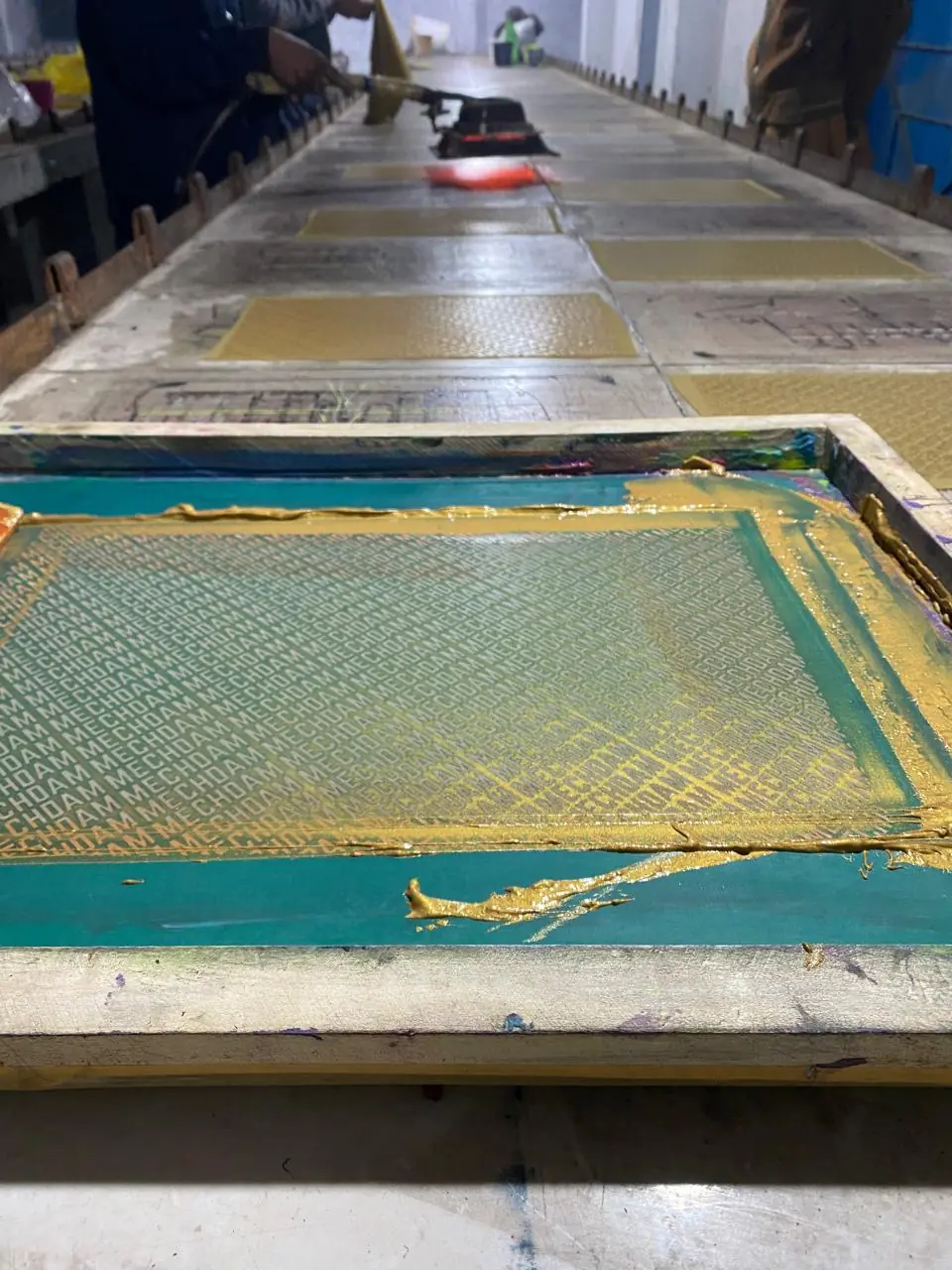
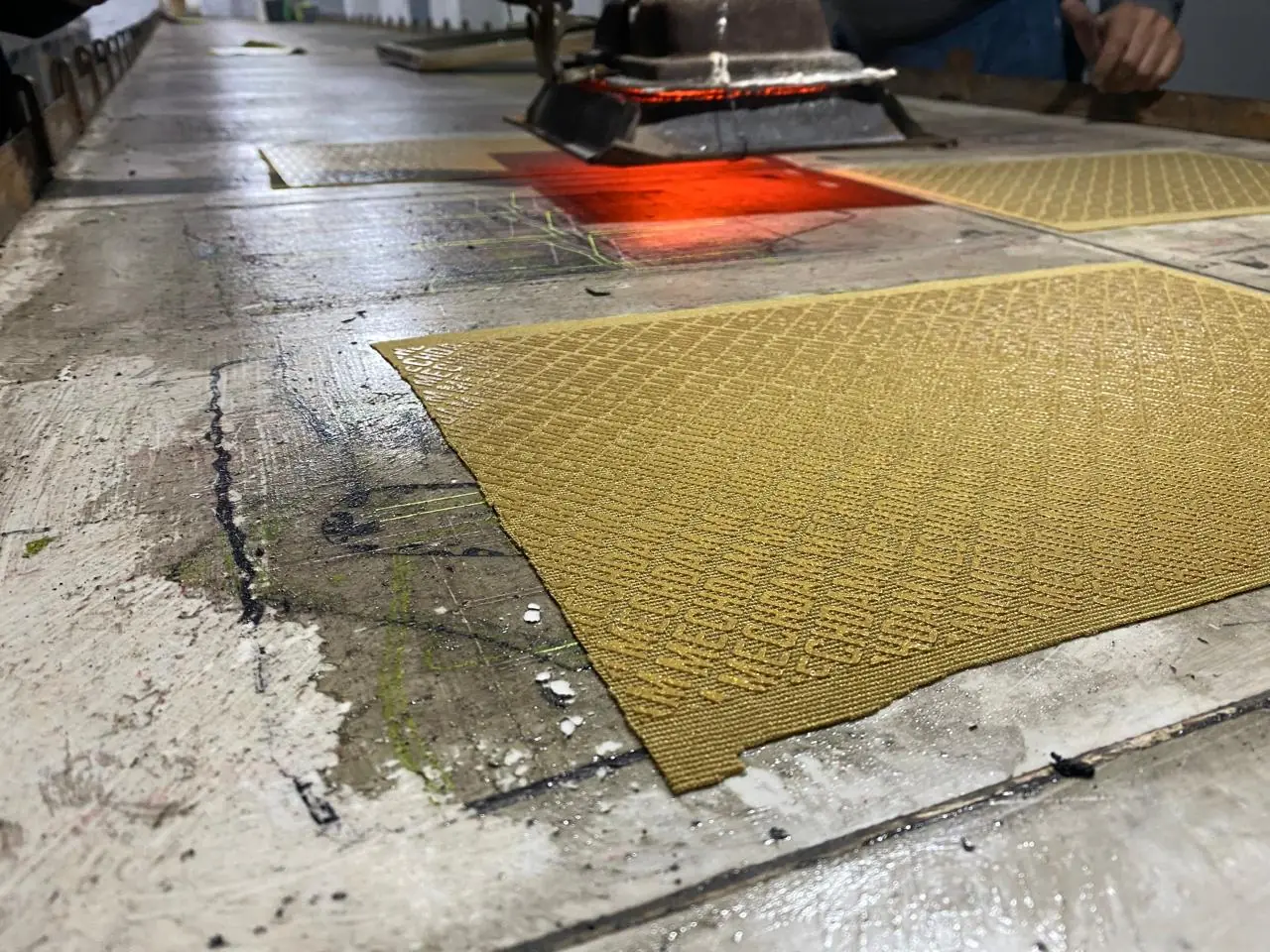
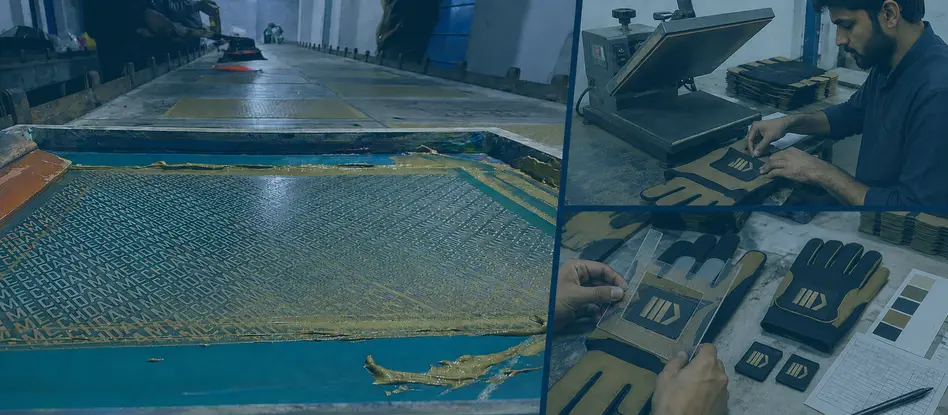
Before stitching, individual components (such as the back of hand, cuff, or leather patch) are customized with client branding. Depending on material compatibility and artwork requirements, options include screen printing, heat transfer, high-frequency embossing, or sewn woven labels.

Phase 3 — Assembly, In-Process Inspection & Finishing
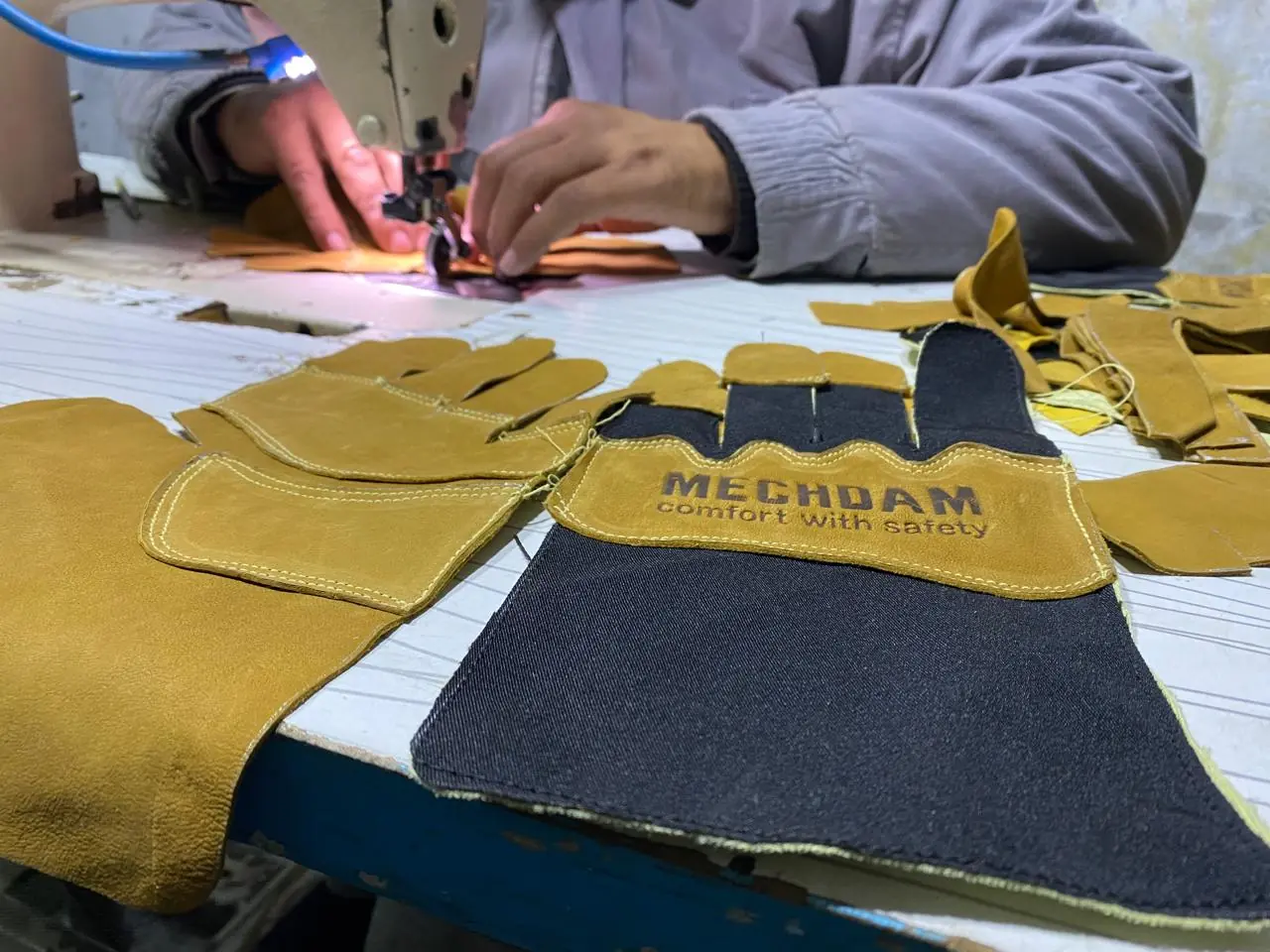
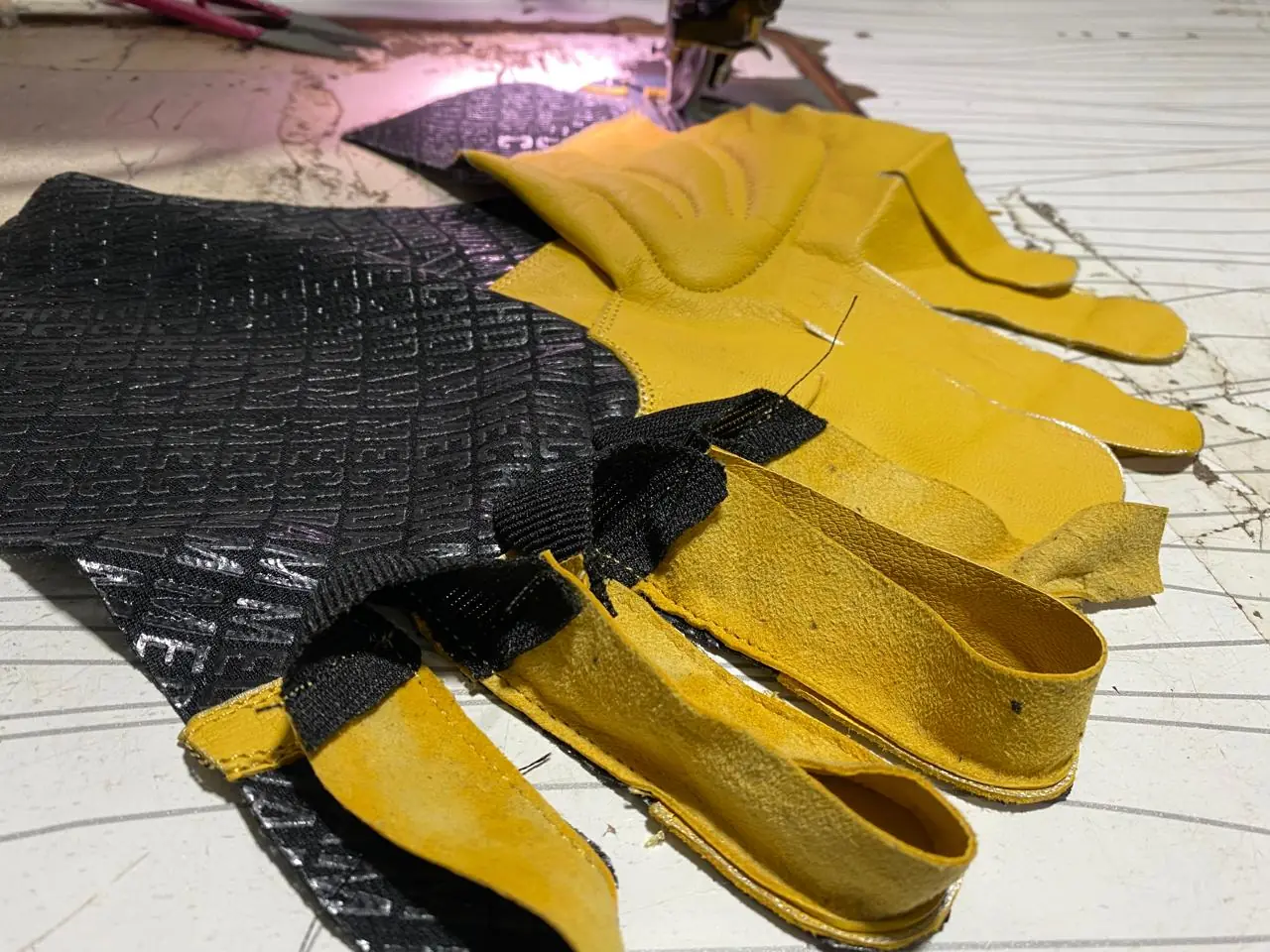
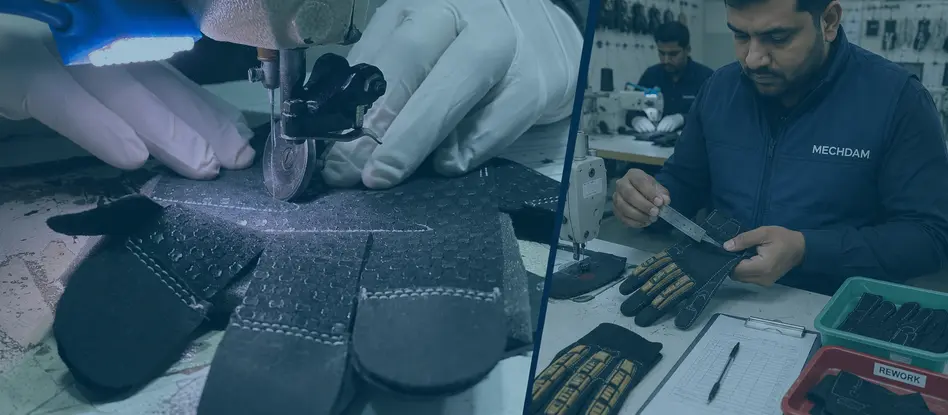
Step 12: Precision Assembly & Industrial Stitching
Skilled operators assemble the glove components using industrial sewing machines. Seam construction varies by glove type and intended use:
-
Stitching Types: Single-needle, double-needle lockstitch, or chainstitch using heavy-duty polyester, nylon, or Kevlar® thread.
-
Critical Areas: Stress points such as thumb crotches, palm overlays, and finger seams receive double stitching or bar-tack reinforcement.
-
Linings & Cuffs: Thermal, cut-resistant, or cotton linings are integrated alongside safety cuffs, neoprene wrists, or elastic closures.


Step 13: In-Process Quality Control (IPQC)
Quality inspectors audit production lines during assembly rather than waiting for finished products. IPQC inspectors check:
-
Seam margin uniformity and stitch tension.
-
Alignment of TPR pads, palm patches, and cuffs.
-
Secure attachment of inner linings without bunches or tight spots.
-
Correct application of size tags and care labels.

Step 14: Final Quality Assurance (FQA) & Inspection
Fully assembled gloves are transferred to the final QA department for comprehensive inspection:
-
Visual & Workmanship Check: Loose threads are trimmed; gloves are checked for spots, leather flaws, or stitching defects.
-
Dimensional & Pair Matching: Left and right gloves are paired to verify size consistency, finger length symmetry, and cuff width.
-
Functional Integrity: Seams are stress-tested manually to ensure seam strength under tension.


Phase 4 — Private-Label Packaging & Export Shipping
STEP 15: Private-Label Packaging
- Pair matching & size tagging
- Custom header cards / hangtags
- Inner polybags with barcode / suffocation warnings
STEP 16: Final Pre-Dispatch Audit
- Master carton quantity & SKU verification
- Carton drop/stacking stability check
- Shipping mark & barcode scannability audit
STEP 17: Freight Logistics & Export Documentation
- Container loading & palletization (if required)
- Commercial invoice, packing list, BL / AWB issuance
- Delivery under agreed Incoterms (FOB, CIF, CFR)


Step 15: Pairing, Sizing & Private-Label Packaging
Finished work gloves are prepared according to customer retail or commercial packaging specifications:
-
Gloves are paired and bound with plastic ties, branded header cards, or hangtags.
-
Items are bagged into inner polybags printed with barcodes, SKU numbers, and suffocation warnings.
-
Inner bags are organized into sturdy corrugated export master cartons labeled with custom shipping marks.


Step 16: Final Pre-Dispatch Audit
Before sealing master cartons, QA supervisors conduct a final pre-dispatch audit. They confirm carton quantities, size distributions, SKU labeling accuracy, master carton gross/net weight, and barcode scannability.


Step 17: Freight Logistics & Export Documentation
Cartons are palletized, stretch-wrapped, or loaded directly into export containers. We coordinate container dispatch, port clearance, and international shipping documentation (Commercial Invoice, Packing List, Certificate of Origin, Bill of Lading) based on agreed Incoterms (FOB, CFR, CIF).


Working Glove Quality Control: What We Inspect and When
MECHDAM uses order-specific specifications, an approved pre-production sample and defined checkpoints from incoming material inspection to export-carton release. Inspection records identify the order, style, size range, production stage, checked quantity, defects found, corrective action and final disposition. Products that fail an inspection are segregated from accepted stock, corrected where possible and re-inspected before release.
| Item Checked Per Piece/Pair | Inspection Purpose |
|---|---|
| Cut Panels | Piece identity, visible material defects, left/right orientation, and obvious cutting damage before bundling. |
| TPR/PVC Protective Components | Surface defects, incomplete moulding, flash or sharp edges, colour consistency, and correct component and size. |
| Printed or Branded Components | Correct artwork and version, legibility, position, colour, and visible adhesion or finishing defects. |
| Metal/Plastic Accessories and Closures | Correct component type, visible damage, and basic function before assembly. |
| Finished-Pair Matching | Correct left/right pairing, style, colour, size, label, and visible workmanship before packing. |
| Packaging Identity | Correct SKU, size marking, barcode, hangtag, polybag, and ordered packing configuration. |
Sample-based inspections and frequency
| QC Stage | Inspection Frequency or Coverage | Items Checked |
|---|---|---|
| Incoming Materials (IQC) | Each incoming material lot or batch |
Leather thickness and appearance; fabric GSM, colour and stretch; and trims and thread against the approved specification. |
| First-Piece Approval |
At line start and after any style, size, material, operator setup or component change. |
Construction sequence, seam position, measurements, TPR, patch and label placement, and conformity with the approved sample. |
| In-Process QC (IPQC) |
At a documented interval of 50/100 pairs stitching and at defined bundle or batch checkpoints. |
Stitch density and tension, seam margin, component alignment, reinforcement, lining insertion and rework status. |
| Final QA |
A random sample selected from every finished production lot, plus the defined 100% pair and identity checks. |
Dimensions, workmanship, pair conformity, branding, closures and agreed functional checks. |
| Pre-Dispatch Audit | Every shipment before carton sealing and release |
SKU and size quantities, packing configuration, shipping marks, barcode scanning, carton weight and shipping-document match. |
Multi-Stage Quality Control Summary
| Inspection Stage | Key Focus Areas | Inspection Parameters |
|---|---|---|
| Incoming (IQC) | Raw Materials & Trims | Leather thickness (mm), fabric GSM, color stability, thread strength, TPR pad hardness. |
| In-Process (IPQC) | Sewing & Assembly Lines | Seam tension, stitch density, patch alignment, lining insertion, label positioning. |
| Final QA (FQA) | Finished Products | Workmanship, thread trimming, dimensional symmetry, pairing, branding clarity. |
| Pre-Dispatch Audit | Packaging & Logistics | SKU counts, carton durability, barcode scannability, shipping mark compliance. |

Designed for Global Industrial Applications
Our adaptable manufacturing process allows us to produce specialized work gloves for diverse global safety sectors:
-
Construction & Building: Heavy-duty split leather, reinforced palms, and impact protection.
-
Automotive & Assembly: High-dexterity synthetic leather gloves with oil-resistant grip.
-
Manufacturing & Machinery Maintenance: Cut-resistant linings, abrasion-resistant palms, and ergonomic flex zones.
-
Warehousing & Logistics: Lightweight, breathable synthetic gloves with touch-screen capability and non-slip palm grip.
-
Welding & High-Heat Operations: Heat-resistant split cowhide lined with flame-retardant cotton and sewn with Kevlar® thread.
Check our gallery for a virtual tour of Mechdam Enterprises