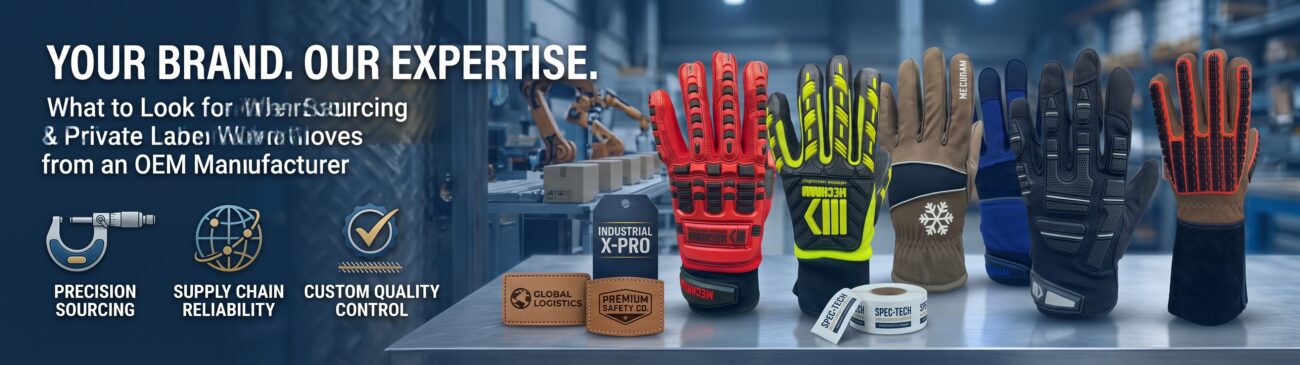

Choosing the right work gloves is essential for protecting your hands, improving grip, and working safely in demanding environments. Different jobs require different levels of protection, comfort, durability, and dexterity. Therefore, the best work gloves depend on the hazards, materials, and tasks involved. In this guide, we explain how to choose work gloves for industrial applications, including welding, mechanical work, construction, handling, and other demanding jobs.
Why Choosing the Right Work Gloves Matters
The right work gloves can make a major difference in workplace safety, comfort, and productivity. They help protect hands from cuts, abrasions, heat, impact, vibration, and other common hazards. In addition, properly selected gloves can improve grip and reduce hand fatigue during long working hours. However, wearing the wrong type of glove may limit movement or provide inadequate protection. For this reason, always consider the specific risks and requirements of your job before choosing work gloves.

Identify the Hazards of Your Work
Before choosing work gloves, identify the hazards you may encounter during your work. For example, welding requires protection from heat and sparks, while mechanical work may require gloves that provide impact protection and a strong grip. Similarly, construction and material handling can expose workers to cuts, abrasions, and punctures. Therefore, understanding the main hazards is the first step toward selecting the right work gloves for your application.
Types of Work Gloves and Their Applications
707 Working Gloves
707 working gloves are designed for general industrial tasks that require reliable hand protection, durability, and grip. They are commonly used for handling, construction, assembly, and other demanding applications where workers need comfortable gloves for extended use.
Welding Gloves
Welding gloves are designed to protect hands from heat, sparks, abrasion, and other hazards associated with welding applications. Leather and heat-resistant materials are commonly used to provide durability while maintaining the protection required for demanding welding environments.
Mechanic Gloves
Mechanic gloves are designed for automotive, mechanical, maintenance, and general workshop applications. They typically combine flexibility, grip, durability, and impact protection, allowing workers to handle tools and components with greater control.
Leather Gloves
Leather work gloves provide durable protection for demanding applications involving abrasion, handling, construction, and general industrial work. Depending on the design and leather used, they can provide a balance of durability, comfort, grip, and hand protection.
Cotton Gloves
Cotton gloves are lightweight and comfortable for general handling, inspection, packaging, and light-duty applications. They are particularly useful when workers need basic protection while maintaining flexibility and tactile sensitivity.
Anti-Vibration Gloves
Anti-vibration gloves are designed for applications involving repetitive vibration from tools and machinery. They use cushioning materials, such as EVA padding, to help reduce vibration exposure while providing a secure grip and comfortable fit.
Impact-Protection Gloves
Impact-protection gloves are designed for demanding industrial environments where hands may be exposed to impact or crushing hazards. Many designs combine durable palms with TPR protection on the back of the hand to provide additional protection without significantly limiting movement.
How to Choose the Right Glove Material
The material of a work glove plays an important role in its protection, durability, comfort, and performance. Different materials are designed for different working conditions. For example, leather gloves provide excellent durability and abrasion resistance, while coated fabrics can offer strong grip and flexibility. Similarly, cotton gloves are suitable for light-duty handling, whereas specialized materials can provide protection against heat, impact, vibration, or other workplace hazards. Therefore, choose the glove material based on the specific requirements of your application.
Consider Protection, Grip, and Dexterity
Protection should always be the first consideration when selecting work gloves. However, a glove must also provide sufficient grip and dexterity for the task. A glove that offers excellent protection but restricts hand movement may reduce productivity and comfort. On the other hand, lightweight gloves may provide better flexibility but may not offer enough protection for demanding applications. Therefore, consider protection, grip, dexterity, comfort, and durability together when choosing industrial work gloves. You can also review OSHA’s PPE guidance for general information about selecting and using personal protective equipment in the workplace.
Choose the Right Glove Size and Fit
The correct glove size and fit are essential for comfort, control, and safe performance. Gloves that are too loose can reduce grip and make it harder to handle tools, while gloves that are too tight may restrict movement and cause discomfort. Therefore, measure your hand carefully and select a size that provides a secure yet comfortable fit. A properly fitted work glove should allow natural finger movement without excessive material around the fingertips.
How to Choose Work Gloves for Different Industries
Different industries have different hand protection requirements. Therefore, choosing work gloves should always start with the specific tasks and hazards involved. Construction workers may need durable gloves with strong abrasion and impact protection, while welders require heat-resistant gloves that protect against sparks and high temperatures. Similarly, mechanics often need flexible gloves with excellent grip and dexterity. In manufacturing and material handling, workers may benefit from cut-resistant, impact-resistant, or high-grip gloves. By matching the glove design to the application, businesses can improve both worker protection and productivity
Construction Work Gloves
Construction work gloves should provide reliable protection against abrasion, cuts, impacts, and rough materials. Durable leather, coated fabric, and impact-resistant designs can be suitable for different construction tasks. In addition, a secure grip helps workers handle tools and materials more safely.
Welding Gloves
Welding gloves require protection against heat, sparks, and abrasion. Leather welding gloves are commonly used for their durability and heat resistance, allowing workers to handle equipment safely. The right design also depends on the type of welding and the level of heat exposure.
Mechanic and Automotive Gloves
Mechanics need gloves that combine protection with flexibility and dexterity. Mechanic gloves with reinforced palms, strong grip surfaces, and impact protection can help workers handle tools, components, and machinery more effectively. Therefore, choose a design that protects the hands without restricting movement.
Manufacturing and Material Handling Gloves
Manufacturing and material-handling applications often require gloves that provide grip, abrasion resistance, and comfort for long-term wear. Depending on the task, workers may need general-purpose working gloves, cut-resistant gloves, coated palm gloves, or impact-resistant designs. Selecting the right protection can help improve handling efficiency and workplace safety.
Anti-Vibration Work Gloves
Workers who regularly operate vibrating tools and machinery may benefit from anti-vibration work gloves. These gloves commonly use cushioning materials such as EVA padding to help reduce vibration exposure while maintaining grip and flexibility. However, glove selection should also consider the specific tools and working conditions.
Common Mistakes When Choosing Work Gloves
Choosing the right work gloves is important for both safety and performance. However, many workers and businesses select gloves based only on price or appearance. As a result, the gloves may not provide enough protection, comfort, or durability for the job. Avoiding these common mistakes can help you choose work gloves that match your specific working conditions.
Choosing Gloves Based Only on Price
Low-cost gloves may seem like a good option, especially for large teams. However, cheaper materials can wear out faster and may provide less protection. Instead, consider the glove’s durability, protection level, comfort, and expected usage. The right balance between quality and cost can provide better value over time
Ignoring the Specific Workplace Hazards
Different jobs expose workers to different hazards. For example, welding requires protection from heat and sparks, while construction work may involve abrasion, impact, and sharp materials. Therefore, always identify the main risks before choosing work gloves. The glove should be designed for the specific hazards of the task. NIOSH PPE provides additional guidance on assessing workplace hazards and selecting appropriate personal protective equipment.
Choosing the Wrong Glove Size
A glove that is too loose can reduce grip and make it harder to handle tools safely. On the other hand, a glove that is too tight can restrict movement and cause discomfort during long shifts. Therefore, choose the correct glove size and fit based on the worker’s hand measurements and the requirements of the job.
Sacrificing Dexterity for Protection
More protection does not always mean a better glove. Some heavy-duty gloves can make it difficult to handle small components, tools, or machinery. Therefore, consider how much hand movement the job requires. Choose a glove that provides adequate protection while still allowing the necessary grip and dexterity.
Choosing the Wrong Material
Work gloves are available in leather, cotton, synthetic fabrics, coated materials, and other options. Each material provides different levels of protection, grip, flexibility, and durability. For this reason, select the glove material according to the working environment, task, and required protection level.
Not Considering Comfort and Long-Term Use
Workers may wear protective gloves for several hours each day. Therefore, comfort should be considered alongside protection and durability. Breathable materials, flexible designs, proper sizing, and comfortable closures can make gloves easier to wear throughout a working shift. Comfortable gloves can also encourage consistent use.
Choosing Work Gloves for OEM and Private-Label Production
For brands and wholesalers, choosing the right work gloves involves more than selecting a standard product. OEM and private-label buyers also need to consider materials, protection levels, sizing, colors, branding, packaging, and production capacity. Therefore, working with an experienced work glove manufacturer can make the process easier and help ensure consistent quality across large orders.
Choose the Right Glove Design
Start by identifying the application and protection requirements of your customers. Depending on the industry, you may need welding gloves, mechanic gloves, impact-resistant gloves, anti-vibration gloves, or general-purpose work gloves. In addition, consider the required grip, flexibility, durability, and level of hand protection before finalizing the design.
Customize Materials, Colors and Branding
Private-label work gloves can be customized to match your brand identity and product requirements. For example, buyers can select materials, colors, cuff designs, palm coatings, protective features, and logo placement. As a result, custom work gloves can provide a consistent product experience while helping your brand stand out in competitive markets.
Consider Sampling Before Bulk Production
Before placing a large order, request samples to evaluate the glove’s fit, materials, stitching, grip, comfort, and overall quality. This step allows you to identify design changes before production begins. Moreover, testing samples can help ensure that the final work gloves meet your expectations and customer requirements.
Check Manufacturing Capacity and Quality Control
For large OEM and private-label orders, consistent production quality is essential. Therefore, choose a manufacturer with reliable production capacity and established quality-control processes. A capable supplier should be able to maintain consistent materials, sizing, stitching, branding, and finishing across different production batches.
Consider MOQ, Lead Time and Packaging
Finally, consider the manufacturer’s minimum order quantity, production lead time, shipping options, and packaging capabilities. These factors can directly affect your inventory planning and overall costs. By discussing these requirements early, brands and wholesalers can create a smoother and more predictable supply chain.
Frequently Asked Questions
Choosing the right work gloves depends on the hazards, materials, working conditions, and level of protection required. Below are answers to some common questions about selecting industrial and protective gloves.
How do I choose the right work gloves?
Start by identifying the main hazards of the job, such as cuts, abrasion, impact, heat, vibration, or chemicals. Then, choose a glove material and design that provides the required protection while maintaining the grip, dexterity, and comfort needed for the task.
What type of gloves are best for industrial work?
The best industrial work gloves depend on the application. General-purpose gloves can work well for material handling, while welding gloves, mechanic gloves, impact-resistant gloves, and anti-vibration gloves are better suited to specific hazards. Therefore, always match the glove to the working environment and task.
How should work gloves fit?
Work gloves should fit securely without being too tight or too loose. A proper fit allows workers to maintain good grip and hand movement while reducing discomfort during extended use. In addition, the fingers should reach comfortably to the ends of the glove without excessive material.
Which material is best for work gloves?
There is no single material that is best for every application. Leather offers durability and abrasion resistance, while cotton provides lightweight comfort. Synthetic and coated materials can offer excellent grip, flexibility, and task-specific protection. Therefore, choose the material based on the hazards and requirements of the job.
What are the best gloves for construction work?
Construction work often involves abrasion, impact, rough materials, and tool handling. Therefore, construction gloves should provide a strong grip, durable materials, and appropriate impact or abrasion protection. The ideal glove will depend on the specific construction task and hazards involved.
Are impact-resistant gloves suitable for heavy-duty work?
Impact-resistant gloves can be suitable for jobs where the hands may be exposed to impacts, crushing risks, or accidental contact with equipment. However, impact protection is only one part of glove selection. Consider grip, abrasion resistance, dexterity, fit, and other workplace hazards before choosing a glove.
What should I consider when buying OEM work gloves?
OEM buyers should consider the glove design, materials, sizing, protection requirements, branding, quality control, minimum order quantity, sampling, production capacity, packaging, and lead time. Working with an experienced manufacturer can also help ensure consistent quality across bulk production.
Can work gloves be customized with a company logo?
Yes. Many OEM and private-label work gloves can be customized with company branding, colors, materials, cuff designs, packaging, and other specifications. Customization allows brands and wholesalers to develop protective gloves that match their product identity and market requirements.
Final Thoughts
Choosing the right work gloves starts with understanding the hazards, working conditions, and protection requirements of each task. From construction and welding to automotive, manufacturing, and material handling, the right glove should provide a suitable balance of protection, grip, durability, dexterity, and comfort.
In addition, businesses looking for OEM or private-label work gloves should consider materials, customization, quality control, sampling, production capacity, and packaging before selecting a manufacturing partner.
At Mechdam, we manufacture custom work gloves for brands, wholesalers, and distributors worldwide. With OEM and private-label production capabilities, we can support custom glove designs, materials, colors, branding, and packaging based on your requirements.
Looking for custom work gloves for your brand? Explore our work glove collection or contact Mechdam to discuss your requirements.
Looking for custom work gloves for your brand? Contact Mechdam to discuss your requirements.