

Wholesale Leather Work Gloves — Bulk OEM & Private Label Manufacturer
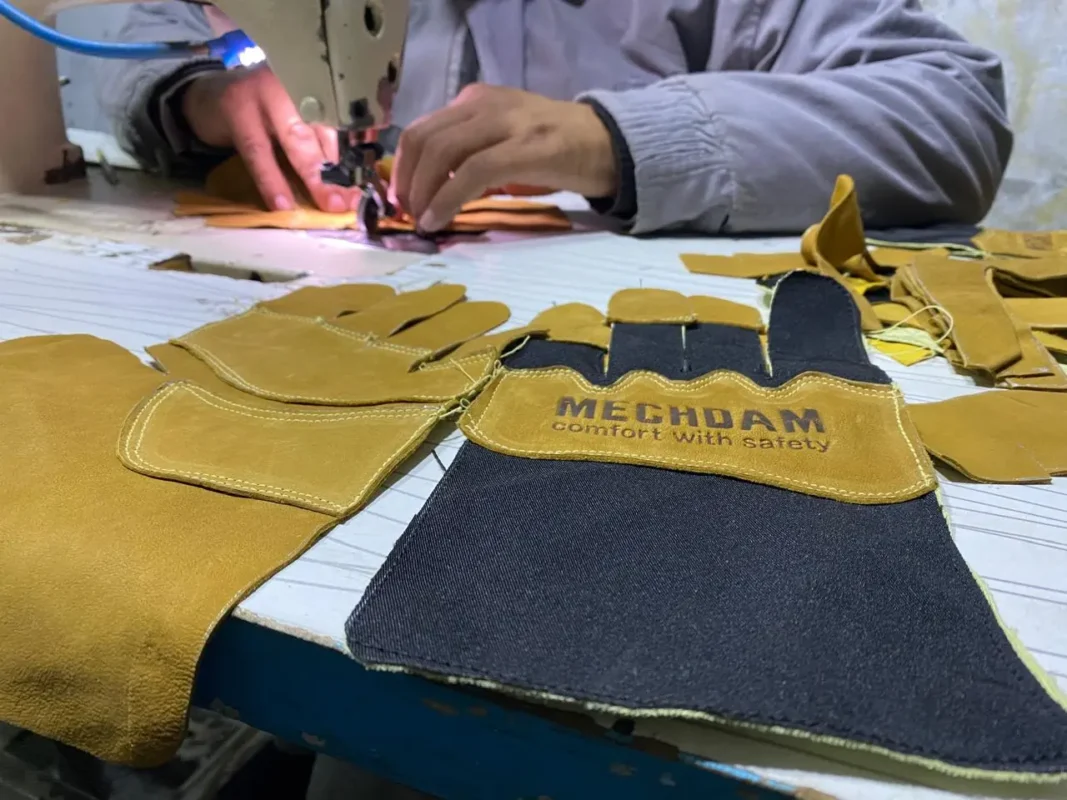
MECHDAM manufactures wholesale leather work gloves in Sialkot, Pakistan, for PPE distributors, safety brands, importers and workwear companies in the United States, the United Kingdom, Canada and Europe. Each bulk order is built to your specification: hide, grain or split construction, protection features, branding and packaging. We are an OEM and private-label factory, not a retail store.
| Typical MOQ | 300 pairs per design |
|---|---|
| Leathers | Cowhide | goatskin | sheepskin |
| Constructions | Grain and split leather, combined or separate |
| Production setup | 100+ stitching machines | 8 cutting presses |
| Quality team | 20 QC personnel within a 200+ person factory team |
| Testing | Independent third-party labs, to your required standard, after order confirmation |
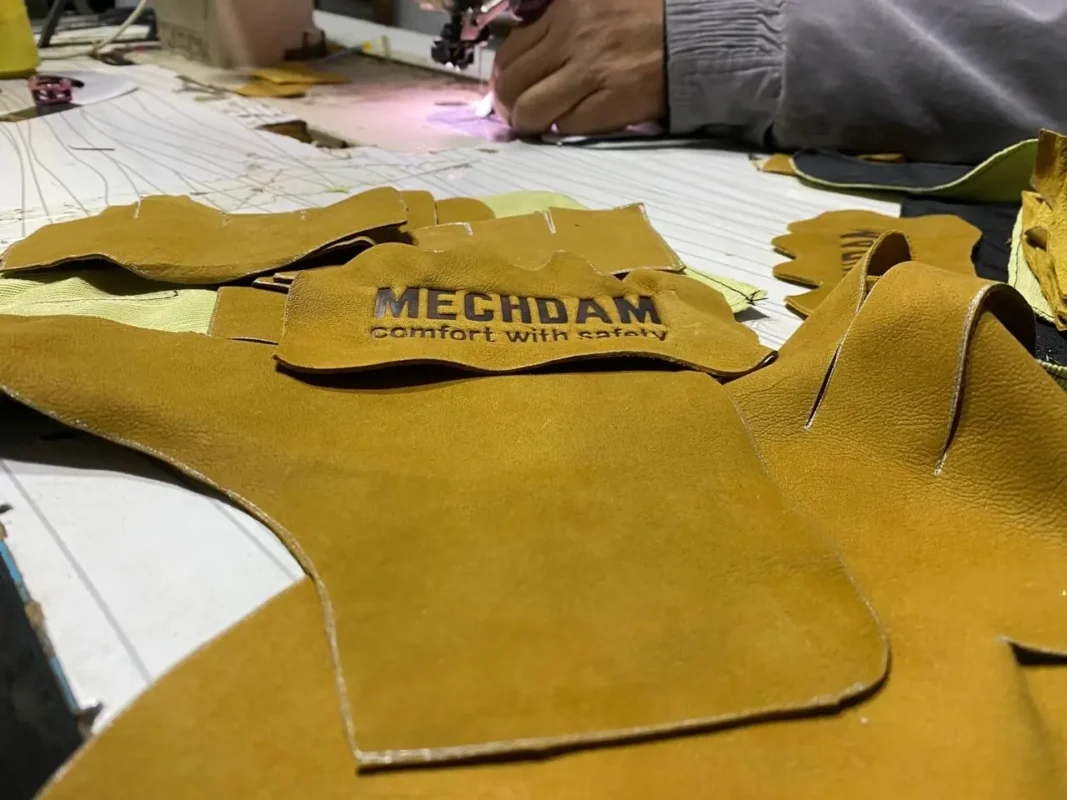
Wholesale Leather Work Gloves Direct from the Manufacturer
Buying bulk leather work gloves from the factory, rather than from a distributor’s stock, changes what you control. As a result, you do not choose from whatever is on the shelf. Instead, you define the glove, and we manufacture it under your brand.
- Your specification: a tech pack, a reference glove you already sell, or an existing MECHDAM style adjusted to your needs.
- Your leather: cowhide, goatskin or sheepskin, in grain or split, at the thickness you specify. We buy leather from external tanneries and check it on arrival; we do not tan leather in-house.
- Your brand: logos, woven labels and private-label packaging, so the gloves arrive ready for your market.
- One accountable factory: sampling, production, quality control and export documents are handled by the same team.
For the full development route, from first sample to approved bulk order, see our custom work gloves manufacturer page, or browse existing styles in the MECHDAM catalogue.
Leather Work Glove Types We Manufacture for Wholesale Buyers
Each type below is a starting construction, not fixed stock. Leather, thickness, lining, cuff and branding are specified for every order, and the links lead to existing MECHDAM styles you can use as a reference.
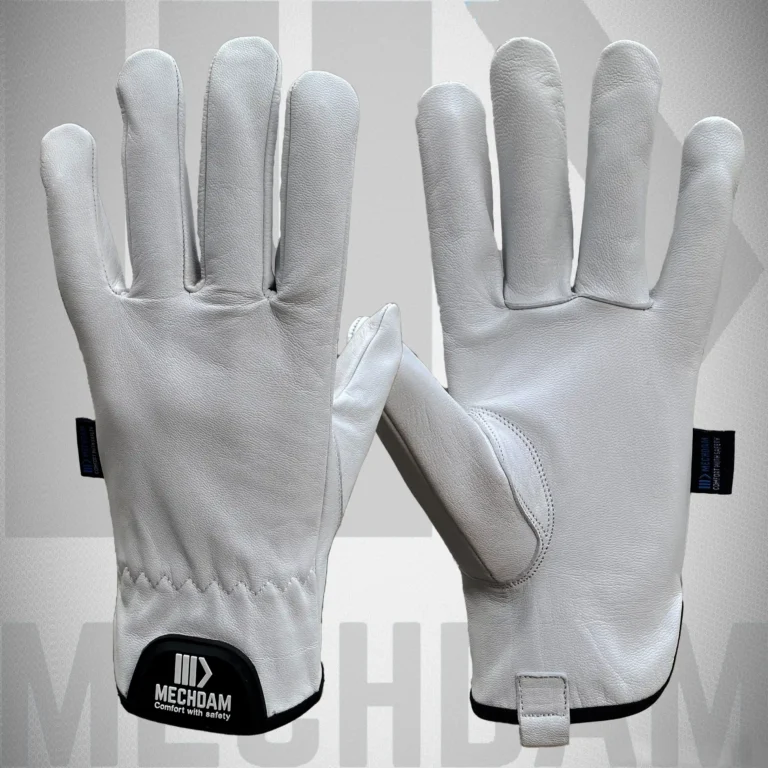
Leather driver
Classic driver pattern with a keystone thumb, unlined or lined, for handling, driving and general maintenance.
View the goatskin driver glove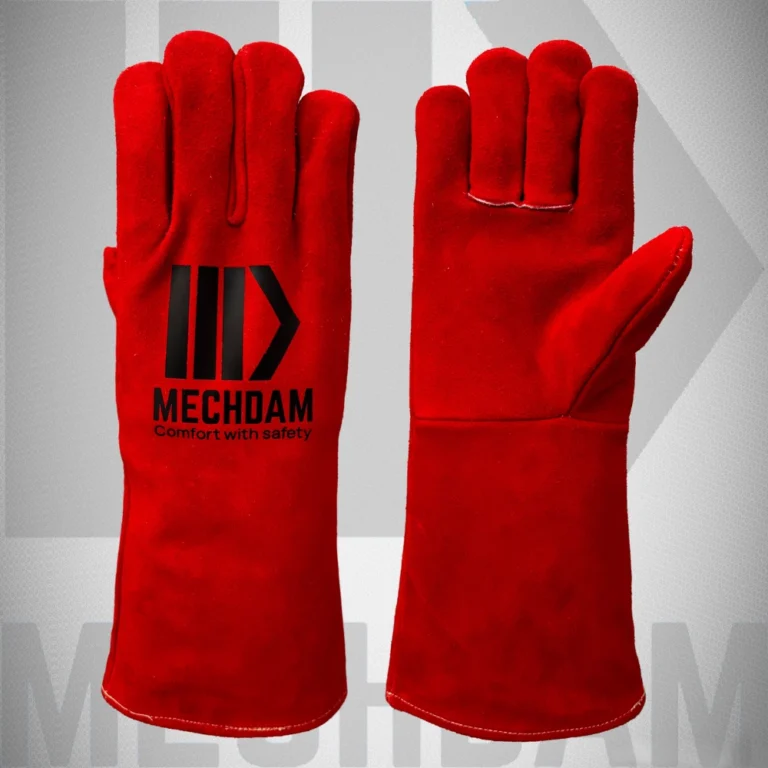
Cowhide
Robust, generally thicker hides used in grain and split constructions for welding, handling and general-duty gloves.
View leather gloves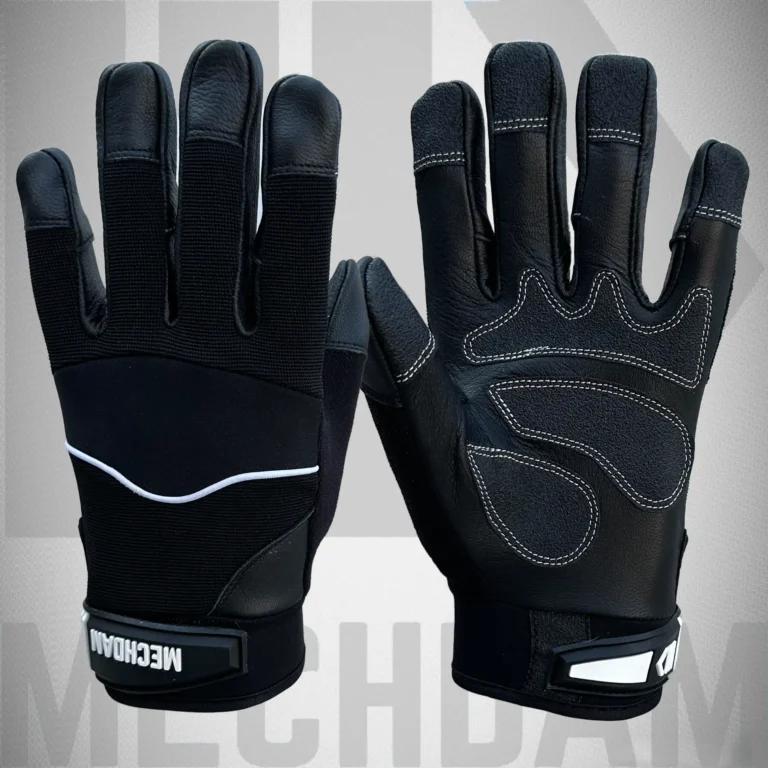
Goatskin
Supple, comparatively thin leather for driver and mechanic styles where dexterity matters.
View the goatskin mechanic glove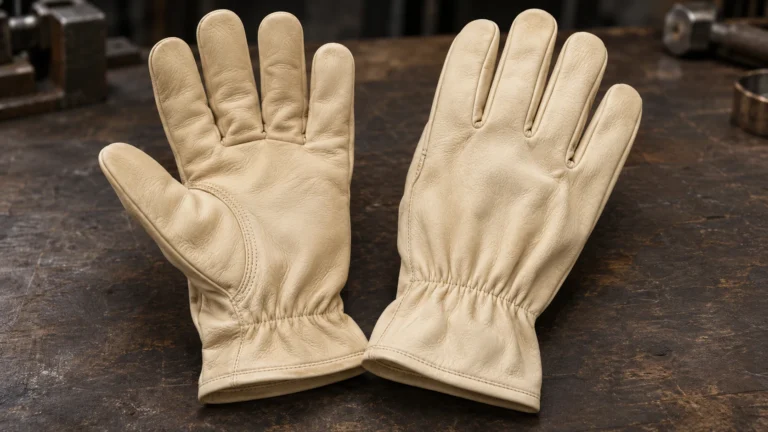
Sheepskin
Soft, fine leather for close-fitting gloves where touch sensitivity matters more than heavy abrasion resistance.
Ask about sheepskin gloves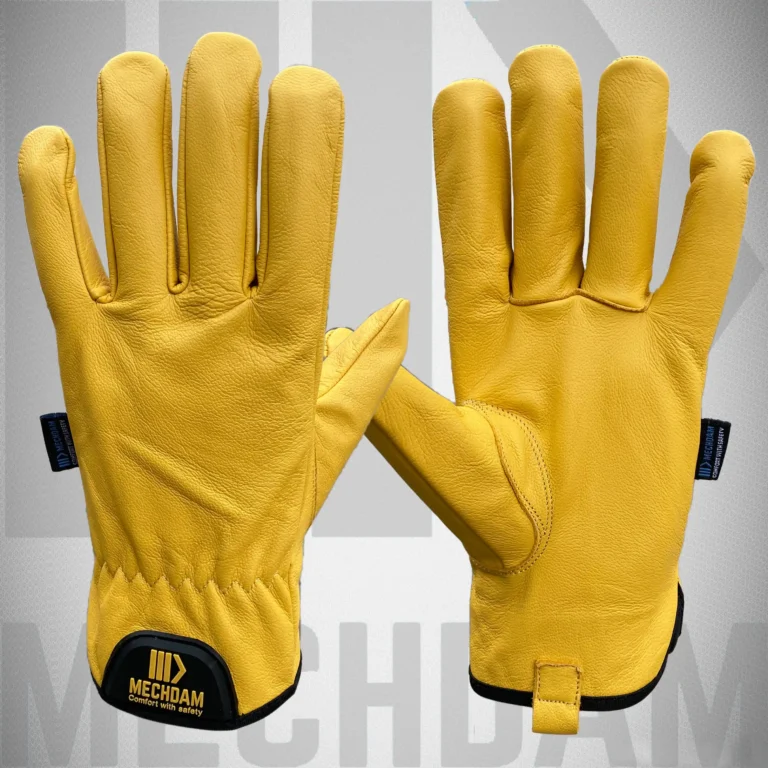
Grain leather
The hide's outer surface: smoother and tighter than split, used for drivers and precision work.
View a grain goatskin glove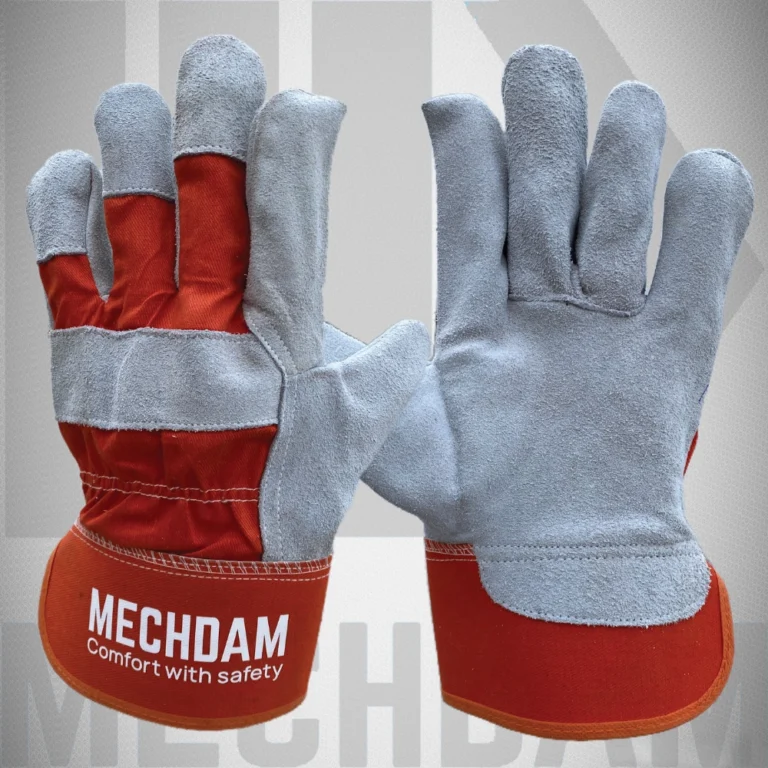
Split leather
The inner layer of the hide with a suede surface on both sides; economical and widely used for heavy-duty palms.
View the 707 split leather glove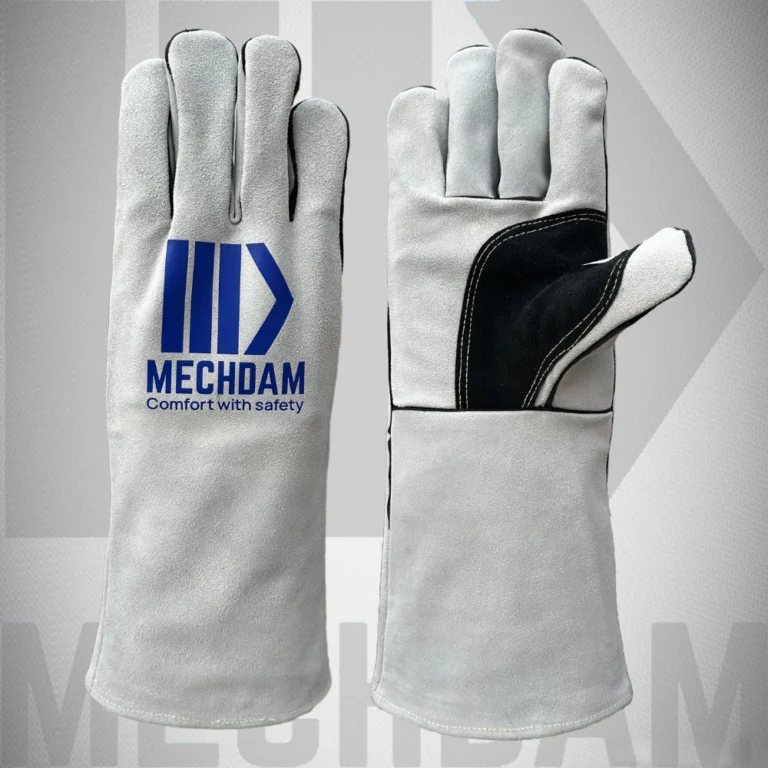
Welding
Cowhide grain or split constructions with long cuffs, designed toward the heat requirements you specify.
View welding gloves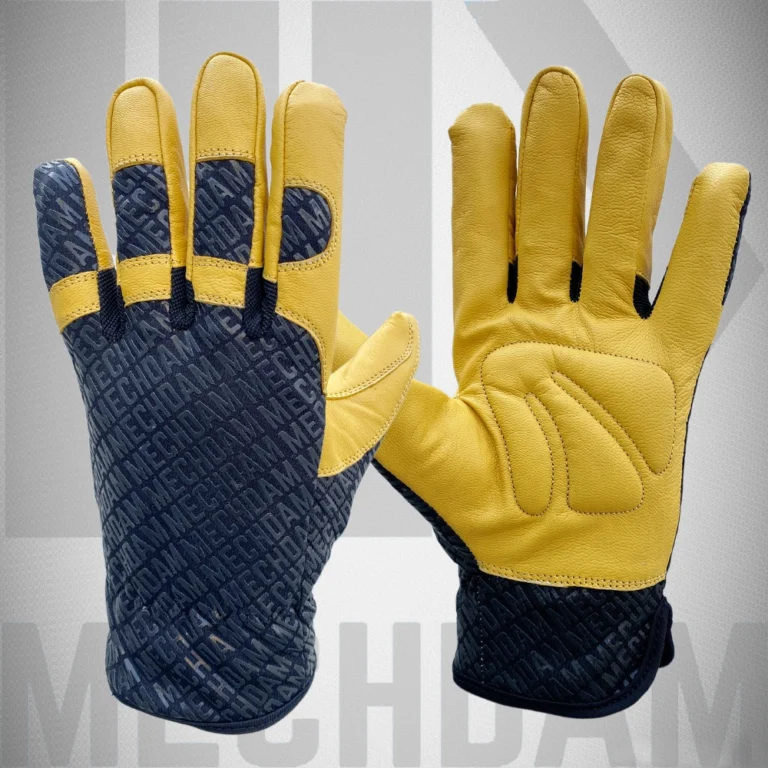
Leather mechanic
Leather palms with flexible backs for workshop tasks that need grip and finger movement.
View mechanic gloves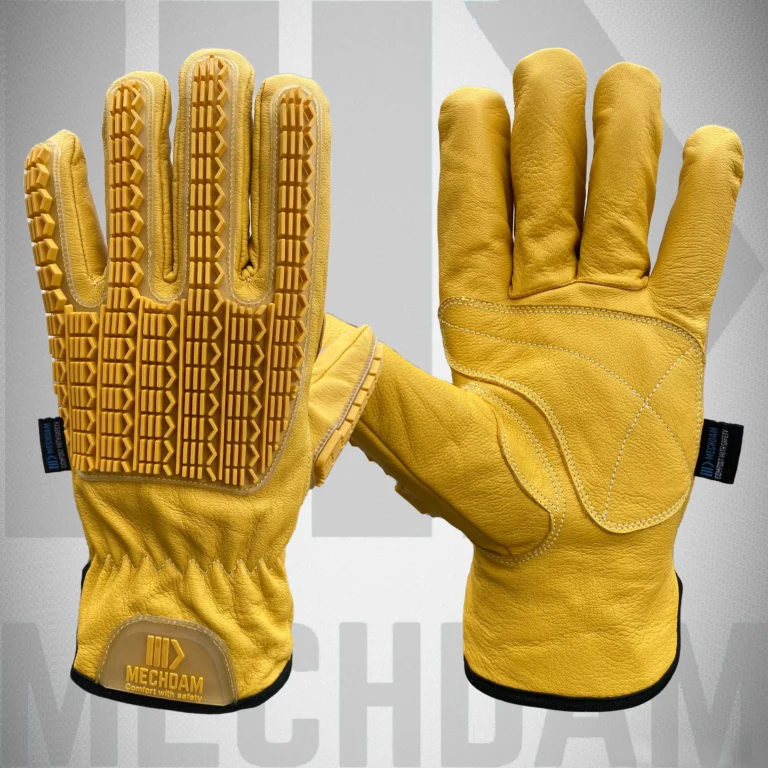
Leather impact
Leather palms with TPR back-of-hand protection made with our in-house CNC mould tooling.
View impact protection gloves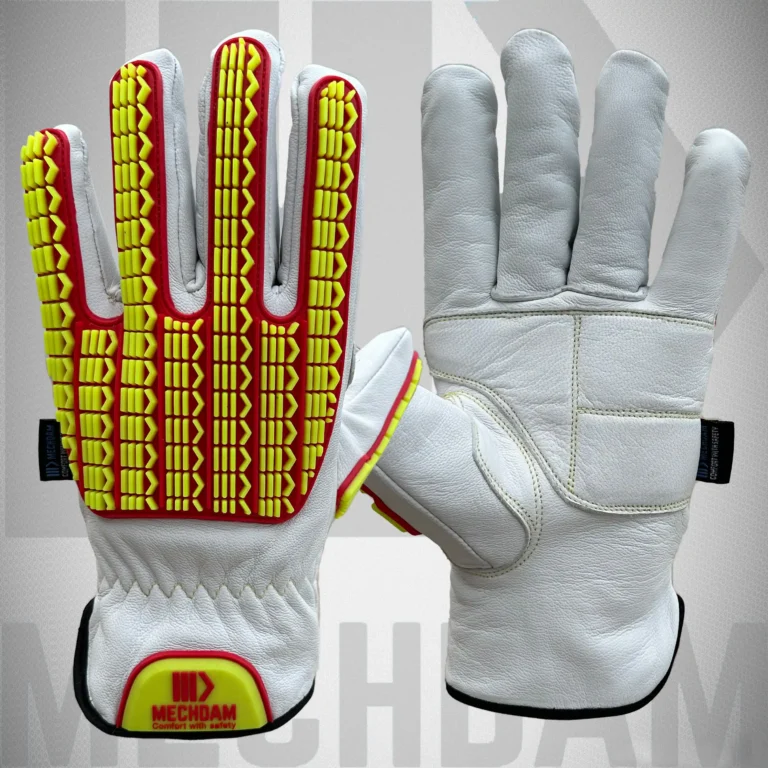
Cut-resistant leather
Leather gloves built with cut-resistant liners; the cut level is confirmed by testing the finished glove.
View cut resistant gloves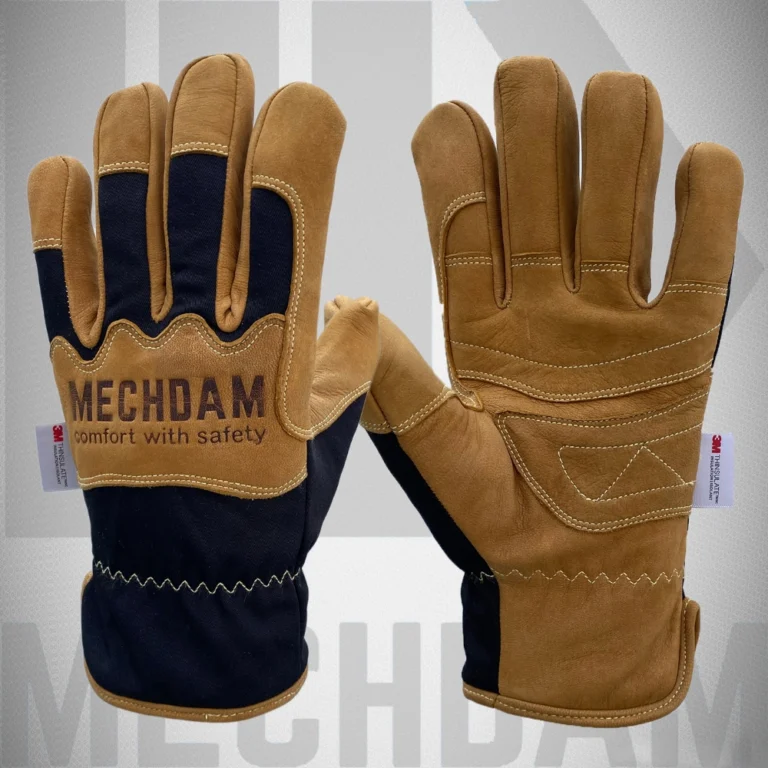
Winter insulated leather
Insulated linings with optional waterproof membranes for cold and wet outdoor work.
View winter and waterproof gloves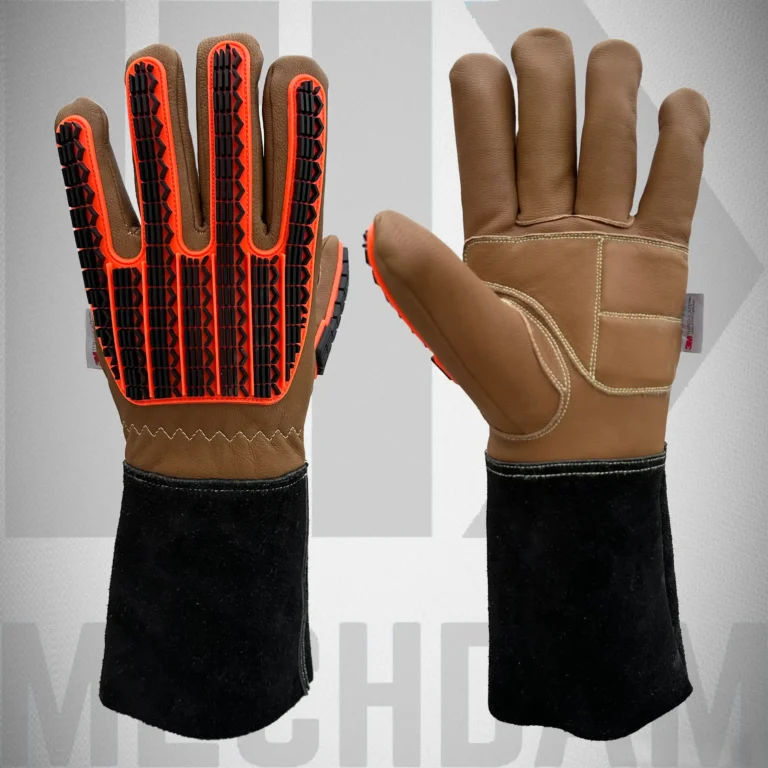
Oil-block leather
Oil-treated leather constructions for oily handling, often combined with TPR impact protection.
View oil-block leather gloves
Cowhide vs Goatskin vs Sheepskin: Choosing the Right Hide
The hide is the starting point of a leather glove, not the finished result. The table summarises tendencies commonly described across the glove industry; it is a selection aid, not a performance rating.
| Consideration | Cowhide | Goatskin | Sheepskin |
|---|---|---|---|
| Feel | Firmer at first; softens with use | Supple and pliable | Very soft and smooth |
| Relative thickness | Generally the thickest of the three | Thinner, with a dense structure | Generally the thinnest |
| Flexibility and dexterity | Moderate | Good | Very good; suits close-fitting patterns |
| Durability considerations | Well suited to heavy handling and rough surfaces | Often chosen where durability and dexterity are both needed | Better for lighter tasks than for heavy abrasion |
| Typical applications | Welding, construction handling, general-duty and 707-style gloves | Drivers, mechanic gloves, oil-block styles, assembly | Fine assembly, driving, tasks needing touch sensitivity |
| Main trade-off | Protection and robustness against dexterity | Less bulk, but less insulation than thick cowhide | Comfort and feel against wear life in rough work |
| Questions to settle | Grain or split? Thickness? Lined or unlined? | Natural or dyed finish? Oil treatment? | Lining? Expected wear duration? |
Why the hide alone does not decide performance
Two gloves made from the same hide can perform very differently. Thickness, the part of the hide used, tannage and finish, the pattern, seam construction, reinforcements and liners all change the result. Therefore, protection levels can only be stated for a specific finished glove after it has been tested.
Grain Leather vs Split Leather
When a hide is split into layers, the outer layer that carries the natural surface is grain leather. The layers underneath become split leather, which has a suede-like surface on both sides.
| Aspect | Grain leather | Split leather |
|---|---|---|
| Surface | Smooth, natural outer surface | Rough, suede-like on both sides |
| Feel and dexterity | Generally softer and more flexible for its thickness | Generally stiffer and coarser |
| Moisture | Tighter surface generally sheds water better | More absorbent unless treated |
| Typical uses | Drivers, mechanic and assembly gloves | Welding gloves, heavy-duty palms, general-purpose gloves |
| Relative cost | Usually higher | Usually more economical |
Many gloves combine both. For example, a glove can pair a grain palm with a split cuff, or a split cowhide palm with a canvas back, as in our 707 split leather work gloves. Consequently, the right choice depends on the task, the wear life you expect and your target price.
Leather Work Gloves by Industry
Glove selection should follow a hazard assessment of the specific task. The table lists common starting points, so treat it as a guide rather than a recommendation for every hazard.
| Industry | Typical tasks | Constructions buyers often specify | Hazards to confirm first |
|---|---|---|---|
| Construction | Material handling, formwork, rebar | Cowhide or goatskin drivers; leather impact gloves | Impact, cuts, abrasion, cold |
| Warehousing and logistics | Carton and pallet handling, loading | Drivers; split leather general-purpose gloves | Abrasion, pinch points, grip |
| Manufacturing and assembly | Component handling, assembly | Grain goatskin or sheepskin drivers; cut-resistant liners | Sheet-metal edges, need for dexterity |
| Maintenance | Mechanical repair, servicing | Leather mechanic and impact gloves | Impact, oils, cuts |
| Welding and fabrication | MIG, stick and TIG welding, grinding | Cowhide welding gloves with long cuffs; thinner grain leathers are often requested for TIG | Heat, spatter, contact heat |
| Agriculture | Fencing, handling, outdoor work | Cowhide drivers; insulated winter gloves | Thorns, abrasion, cold, wet |
| Oil and gas | Pipe handling, rig support | Oil-block leather with TPR impact protection | Impact, oil, cold |
OEM and Private-Label Customization
As an OEM leather work gloves manufacturer, we can adapt most elements of a glove. However, feasibility depends on the glove design, the materials involved and the order quantity, so every option is confirmed during specification review.
| Option | What you can specify |
|---|---|
| Pattern | New pattern development, or changes to an existing MECHDAM pattern |
| Leather | Cowhide, goatskin or sheepskin; grain, split or both; thickness |
| Reinforcement | Reinforced palms, patches and finger reinforcements |
| Cuffs | Elastic wrist, safety cuff, gauntlet or long cuff |
| Sizing | Size range and grading to your size chart |
| Protection | Cut-resistant liners; TPR impact protection from our own moulds |
| Weather | Insulation and waterproof membranes |
| Colour | Leather, fabric, trim and stitching colours |
| Branding | Logo application, woven labels, size and care labels |
| Packaging | Private-label packaging to your artwork |
| Technical requirements | Any buyer-specified requirement, reviewed before quotation |
For branding methods and the sampling route, see the custom work gloves page.
Bulk Ordering, MOQ and the Quotation Process
For wholesale leather work gloves, our typical minimum order quantity is 300 pairs per design. Exact order conditions and pricing depend on your specification, because hide, thickness, construction, protection components, size mix, branding and packaging all affect cost. For this reason, we quote each program individually and do not publish price lists or volume-discount tiers.
Send your RFQ
Share the glove type, application, leather, protection needs, quantity, sizes, branding and destination.
Specification review
Our team checks feasibility, suggests materials where useful and clarifies open points.
Quotation
You receive a quotation for the agreed specification, with order conditions.
Sample development
We develop a sample. Sample costs and timelines are confirmed after reviewing your specification.
Sample approval
You review fit, materials and branding, and request changes if needed.
Order confirmation
The approved sample becomes the production reference, and any required testing is arranged.
Bulk production and QC
Gloves are produced and inspected at each stage against the approved sample.
Packing and export
Gloves are packed to your requirements and shipped with the export documents.
How to Choose Leather Work Gloves for Bulk Procurement
Start from the hazard, not the hide
First, list the hazards of the task: abrasion, cuts, impact, heat, cold, oil or wet conditions. The hazard decides the construction; the hide then fine-tunes comfort, dexterity and cost.
Fit and construction
Next, define your size range and how the glove should fit. Then decide the construction details: palm reinforcement, thumb style, cuff type and lining. In addition, consider how long the glove must last in use, because thicker or reinforced gloves usually cost more but may be replaced less often.
Testing, packaging and delivery
Finally, state which standard and performance level the gloves must reach in your market, and how they should be packed and labelled for resale. For broader selection advice, see our guide on how to choose work gloves.
Bulk procurement checklist
| Item | What to define before you request a quote |
|---|---|
| Hazards | The risks the glove must address |
| Leather | Hide, grain or split, thickness, finish |
| Construction | Pattern, thumb, reinforcement, cuff |
| Lining | Unlined, cut-resistant liner, insulation or membrane |
| Fit | Size range and size breakdown per design |
| Protection target | Standard and level required in your market |
| Branding | Logo, labels and their positions |
| Packaging | Pairing, inner packs, retail packaging, carton marks |
| Logistics | Destination country and preferred delivery terms |
Safety Standards and Testing for Leather Work Gloves
Wholesale leather work gloves sold in the US, UK, Canada and the EU are usually specified against the standards below. Standard texts are sold by the standards bodies, so we link to official summaries where available.
| Standard or rule | What it covers | Main markets |
|---|---|---|
| ANSI/ISEA 105-2024 | Classification of hand protection, including cut levels A1–A9, measured with the ASTM F2992 test method | USA, often referenced in Canada |
| ANSI/ISEA 138-2019 | Impact protection for the back of the hand, levels 1–3 | USA |
| EN 388:2016+A1:2018 | Mechanical risks: abrasion, cut, tear, puncture, and optional impact | EU, UK |
| EN 407:2020 | Thermal risks (heat and flame) | EU, UK |
| EN 12477 | Protective gloves for welders, Type A and Type B | EU, UK |
| EN 511:2006 | Protection against cold | EU, UK |
| EN ISO 21420:2020 | General glove requirements, including sizing, marking and innocuousness, such as chromium VI limits for leather | EU, UK |
| OSHA 29 CFR 1910.138 | US employers must select hand protection based on the hazards | USA |
| Regulation (EU) 2016/425 | Rules for placing PPE on the EU market | EU (and GB through retained law) |
Designed toward a level vs verified by testing
A glove can be designed toward a protection level by choosing materials and constructions that usually achieve it. However, only a laboratory test of the finished glove can verify the level. MECHDAM does not state ratings for gloves that have not been tested.
How testing works with MECHDAM
Once your order is confirmed, we arrange testing of the finished glove to the standard you require through independent third-party laboratories, which issue the test report or certificate. Under the EU regulation, a brand that places PPE on the market under its own name takes on the manufacturer’s obligations, so private-label buyers should plan testing and documentation early. For practical selection guidance, see the UK HSE glove guidance and Canada’s CCOHS glove guide.
How MECHDAM Manufactures Leather Work Gloves
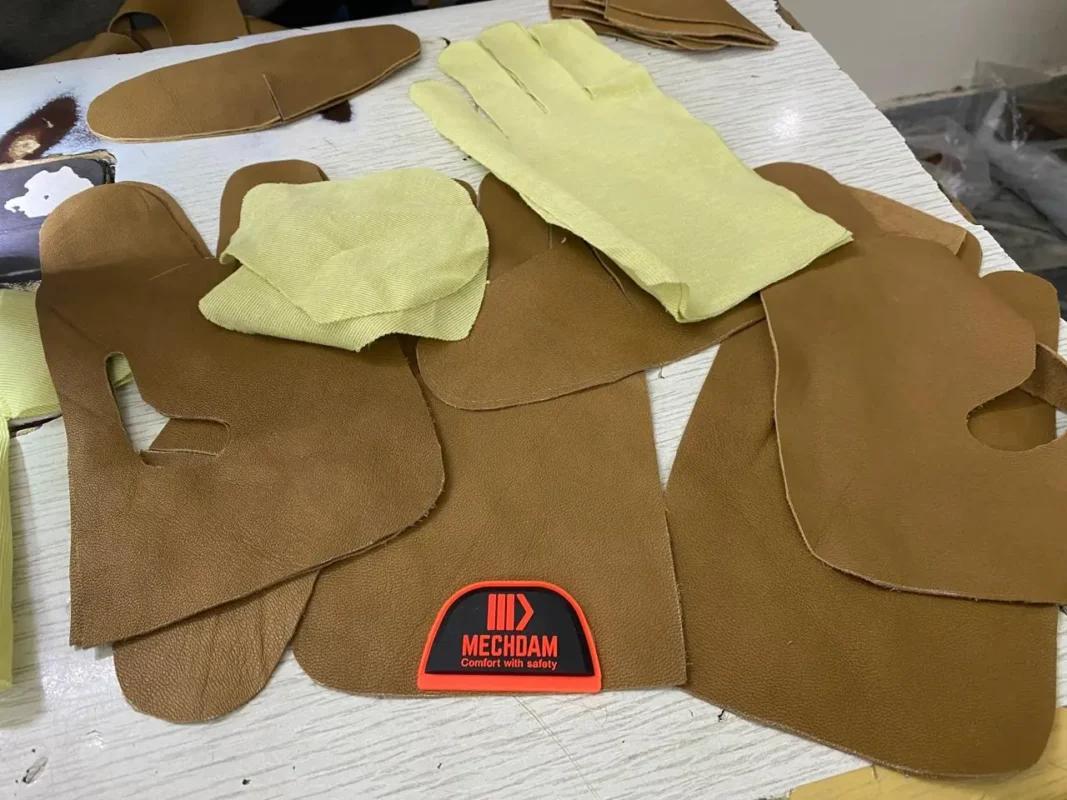
We do not tan leather ourselves. Instead, we purchase leather from external tanneries to the specification agreed for your order, and production starts once it passes our incoming checks.
- Incoming leather checks: leather condition and thickness are checked before cutting.
- Pattern and cutting: components are cut on cutting presses to the approved pattern.
- Component preparation: linings, reinforcements and TPR parts from our own CNC-made moulds are prepared.
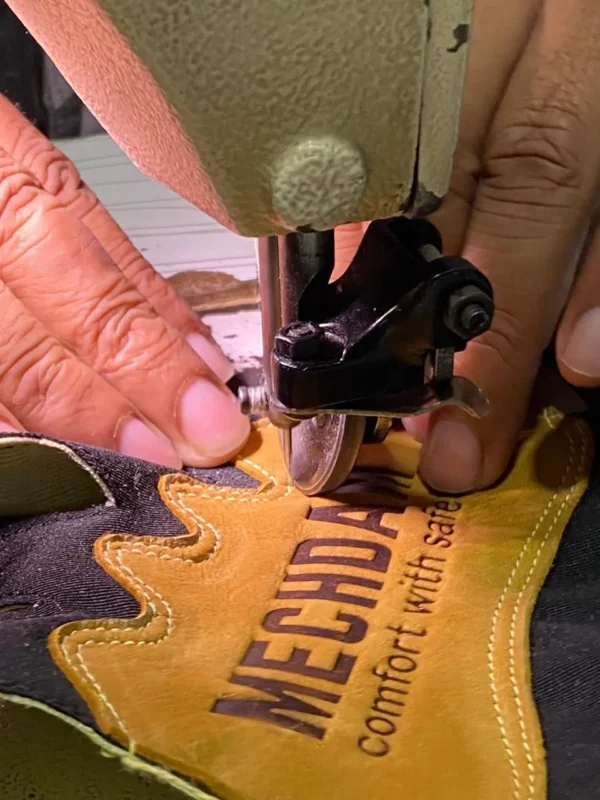
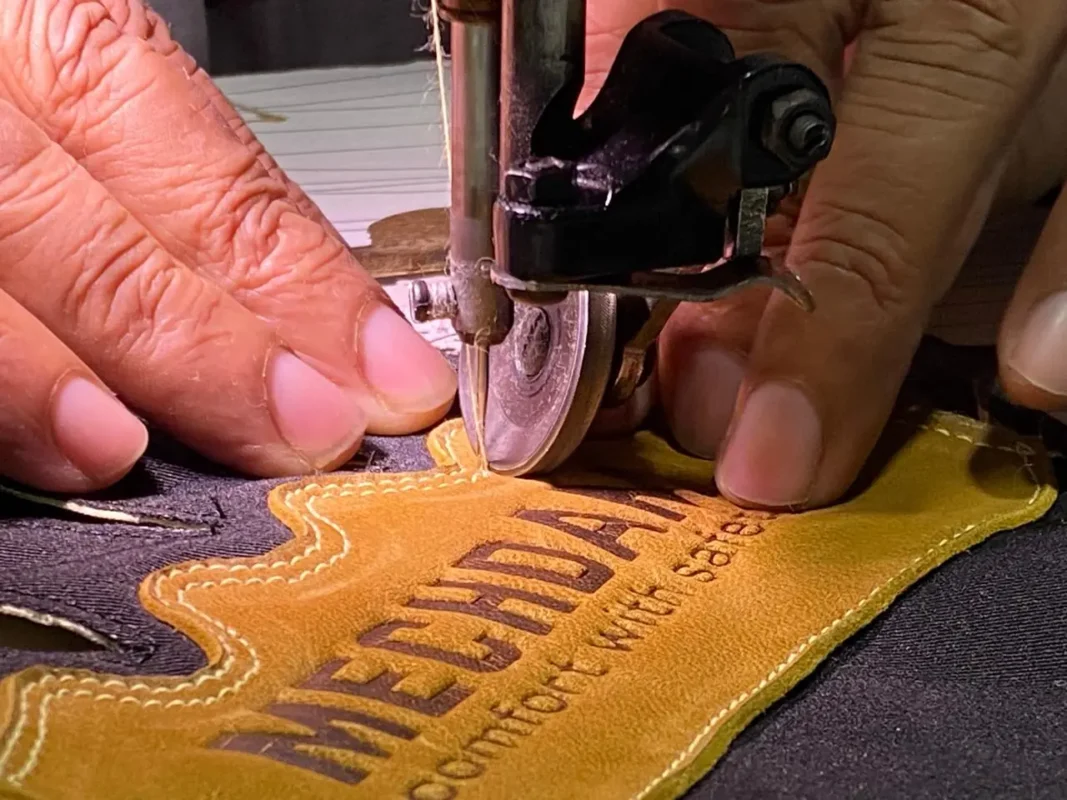
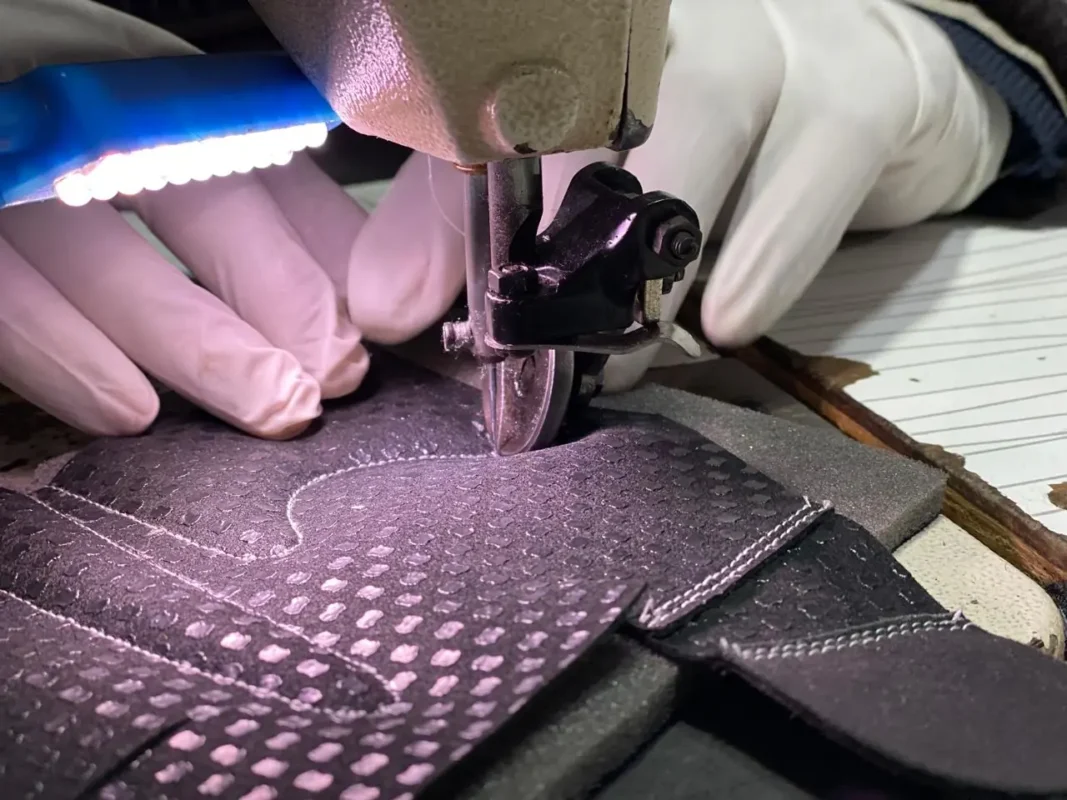
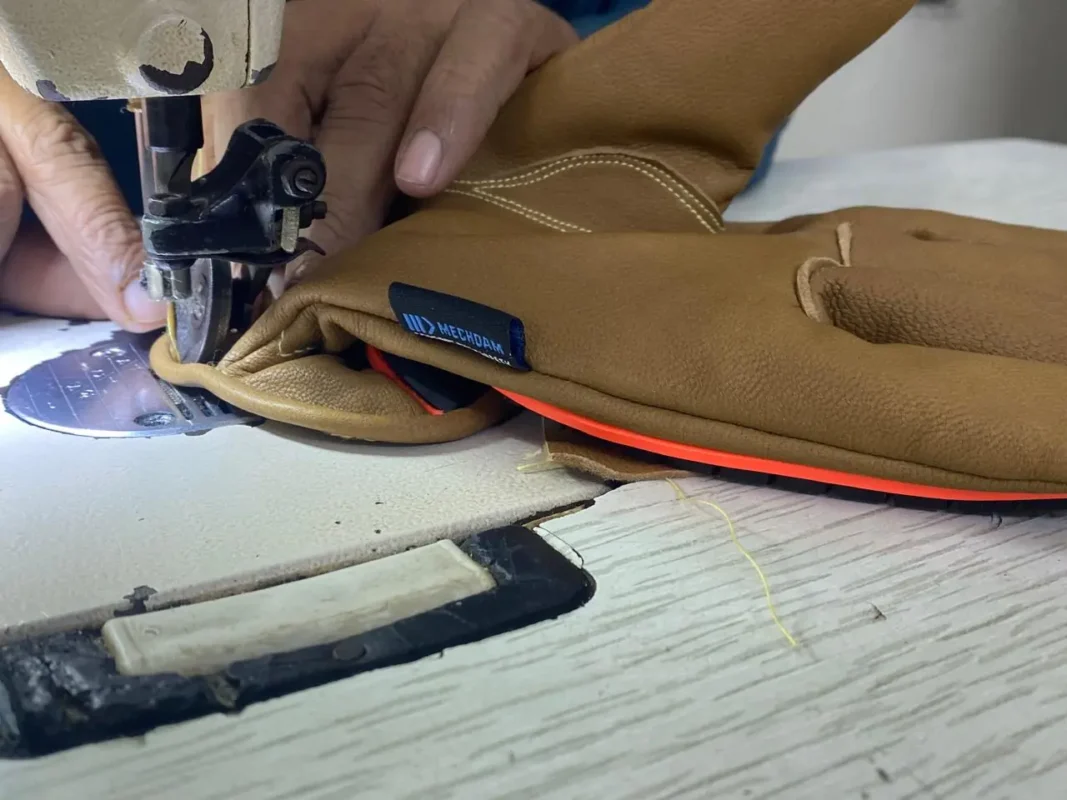
- Stitching and assembly: gloves are assembled on our stitching lines to the approved sample.
- Finishing and pairing: gloves are finished, paired, size-checked and labelled.
- Packing: gloves are packed to your private-label requirements.
For every stage in detail, see our 17-step production process.
Quality Control for Bulk Leather Glove Orders
Quality checks run through the whole order, not only at the end. Specifically, we check:
- Incoming materials: leather and components are inspected before use.
- Components: TPR and other protective parts are checked before assembly.
- In process: stitching, seams and component alignment are checked during assembly.
- Final inspection: dimensions, sizing and workmanship are compared with the approved sample.
- Before dispatch: cartons are audited against the order.
Buyers may also appoint their own third-party inspection. Inspection stages and frequencies are described in our quality-control process.
Packaging and International Shipping
Export arrangements and packaging requirements are agreed for each order. In particular, packaging configurations, including pairing, inner packs, private-label retail packaging and carton marking, can be discussed according to your order requirements.
We prepare the export documents for your shipment and coordinate sea or air freight to your destination. Delivery terms are confirmed in the quotation. Our shipping policy explains how OEM orders are shipped.
Wholesale Leather Glove Constructions Compared
In short, use this comparison to decide which construction to quote and which questions to settle before sampling.
| Construction | Typical applications | Design considerations | Questions for your RFQ |
|---|---|---|---|
| Leather driver | Handling, driving, general maintenance | Hide and thickness decide feel and wear life | Which hide? Grain or split? Keystone or other thumb? |
| Reinforced palm | Heavy handling, rough materials | Extra layers add durability but reduce dexterity | Where do gloves wear out first in your users’ tasks? |
| Cut-resistant leather | Sheet metal, glass, sharp-edged parts | Liner choice drives cut level, comfort and cost | Which cut standard and level must be tested? |
| Impact (TPR) | Construction, oil and gas, heavy maintenance | TPR shape and coverage affect protection and flexibility | Is an ANSI/ISEA 138 or EN 388 impact rating required? |
| Winter insulated | Outdoor work in cold or wet conditions | Insulation and membrane add warmth but reduce dexterity | What temperatures and wet conditions are expected? |
| Welding | MIG, stick and TIG welding, fabrication | Leather thickness, cuff length and seam threads matter | Which welding process? EN 12477 type required? |
Wholesale Leather Work Gloves: Buyer FAQ
What is your minimum order quantity for wholesale leather work gloves?
Our typical MOQ is 300 pairs per design. Exact order conditions depend on the construction, materials and branding you specify.
Which leathers can you use?
We manufacture gloves in cowhide, goatskin and sheepskin, in grain leather, split leather or a combination of both.
Do you tan your own leather?
No. We purchase leather from external tanneries to the specification agreed for each order and check it on arrival.
Can you make private-label leather gloves under our brand?
Yes. We apply your logo, woven labels and private-label packaging, so the gloves are ready for resale under your brand.
Can you copy a glove we already sell?
We can develop a glove from your reference sample or tech pack. You must hold the rights to any design, logo or trademark you ask us to reproduce.
What is the difference between grain and split leather gloves?
Grain leather is the hide's outer surface and is generally smoother and more flexible. Split leather is an inner layer with a suede surface, usually more economical and widely used for heavy-duty and welding gloves.
Are your gloves certified to EN 388 or ANSI/ISEA 105?
Ratings apply to a specific tested glove. After your order is confirmed, we arrange testing to the standard you require through independent third-party laboratories, which issue the test report or certificate.
How much do samples cost and how long do they take?
Sample development costs and timelines are confirmed after reviewing your specifications.
What affects the price of bulk leather work gloves?
The hide, leather thickness, grain or split construction, liners and protection components, size mix, branding, packaging and order quantity.
Do you publish wholesale price lists?
No. Because every program is specified individually, we quote each request rather than publishing price lists or discount tiers.
How are the gloves packed?
Packaging configurations can be discussed according to order requirements, including pairing, inner packs, private-label packaging and carton marking.
Do you ship to the United States, the UK, Canada and Europe?
Yes. We coordinate sea or air freight to international destinations and prepare the export documents for each shipment.
Can we inspect the order before shipment?
Yes. Our own quality team inspects throughout production, and buyers may also appoint a third-party inspection before dispatch.
What should I include in my RFQ?
Glove type, intended application, preferred leather, required protection, quantity, size breakdown, logo and packaging requirements, reference images or a tech pack, and the destination country.
Request a Bulk Quote for Wholesale Leather Work Gloves
Send us your requirements and our team will review the specification and reply with questions or a quotation. To speed things up, please include:
- Glove type and intended application
- Preferred leather (hide, grain or split, thickness if known)
- Required protection and the standard for your market
- Quantity and size breakdown per design
- Logo, label and packaging requirements
- Reference images, a sample description or a tech pack
- Destination country
Use our RFQ form or email info@mechdam.com.