


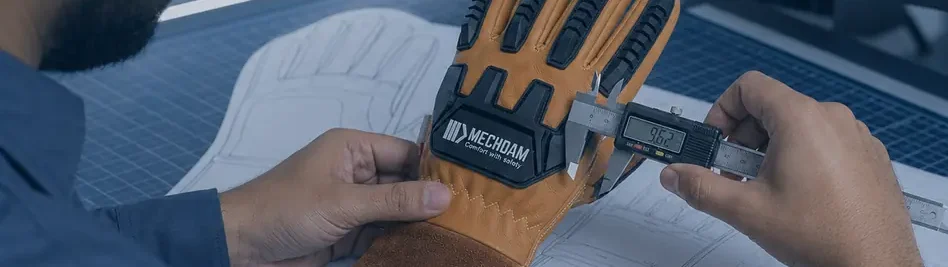
A properly fitting glove sample should feel secure and comfortable, suit the people who will wear it, allow the movements their tasks require and match the agreed construction. A neat appearance and the correct size label are not enough. Gloves that look right can still restrict the fingers, slip on the hand or press where a seam meets the skin.
For PPE brands, importers and distributors, fit problems are easiest to fix before bulk production. This checklist explains what to check, how to report a problem and when to approve or revise a custom work glove sample.
Before checking the sample
Prepare a few details first, so that your results are useful and comparable.
- Use the relevant size chart. Sizes are not universal, so use the chart that applies to this glove and market. As one example of how charts are built, HSE’s glove guidance uses hand length and hand width.
- Record measurements consistently. Note each tester’s hand measurements, and use the same units throughout.
- Separate hand and glove measurements. A hand measurement describes the person. A flat glove measurement describes the sample. Label each one clearly so they are not compared as if they were the same.
- Test the intended construction. Linings, padding, reinforcement and impact parts can all change how a glove feels. A sample without them may not tell you how the final glove will fit.
- Use representative testers. One person cannot represent a full size range. Where possible, include intended users across the sizes you plan to sell.
Six practical fit checks
| Check | What to look for | What to report |
|---|---|---|
| Finger length | Fingers reach comfortably, without tight tips or unwanted excess material | Which fingers, and whether they feel short or long |
| Palm width | No overall tightness, and the glove does not slip or twist on the hand | Where it is tight or moves |
| Thumb | Free thumb movement, with no pressure around the thumb web | Movement affected and pressure point |
| Finger bending and grip | Hand closes without strong resistance, and objects can be held securely | Fingers affected and the task that was difficult |
| Seams and lining | No lining folds, rubbing seams or uncomfortable pressure points | Exact location, and when it was noticed |
| Cuff and wrist | Glove goes on easily, the cuff stays secure and the wrist can move | Problem when putting on, moving or securing the glove |
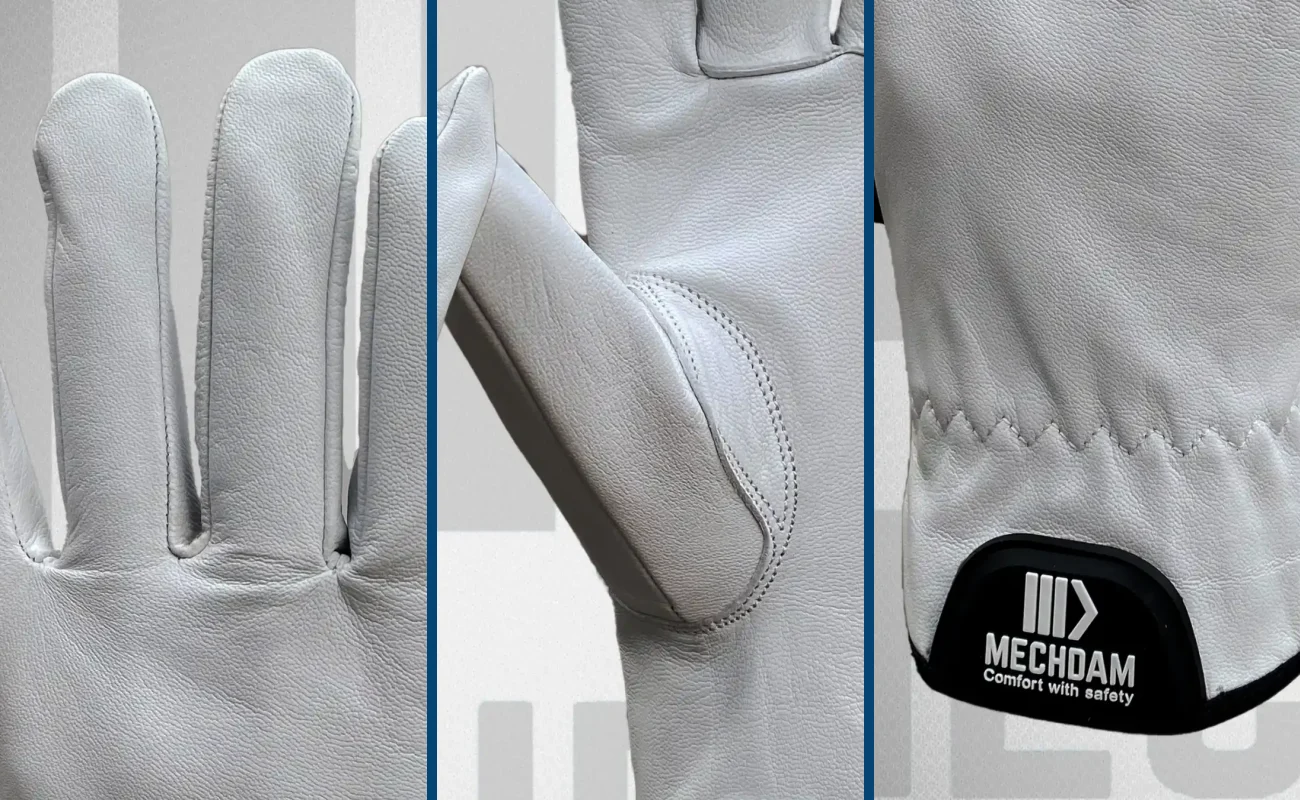
Dexterity, the ability to move the fingers and handle objects accurately, matters most in the finger bending and grip check. The right level depends on the task: OSHA’s hand protection standard requires employers to consider the task, conditions, duration of use and hazards when selecting hand protection.
A simple wear trial
Keep the trial short, safe and consistent. Ask each tester to wear the gloves and complete the same steps with harmless objects, for example:
- Open and close the hand several times.
- Hold an unpowered tool handle.
- Pick up and turn smooth components.
- Bend the wrist and adjust the cuff.
Record comfort, control, slipping and pressure as the trial progresses. A problem may not appear in the first minute, and HSE notes that tight gloves can tire the hands, while oversized gloves can form folds that interfere with work.
Do not expose hands to sharp edges, heat, chemicals or moving machinery to test protection. A comfort or fit trial does not establish cut, impact or other protective performance. Those requirements need appropriate assessment and testing.
How to report a fit problem clearly
General comments such as “too tight” are difficult to act on. Useful feedback gives the manufacturer enough detail to find the problem and review it.
Hypothetical example: “Sample MG-01, size L. The tester’s hand measurements are in the attached sheet. The middle and ring fingers feel tight at the second joint when making a fist, but not when the hand is open. Photos and a short video are attached. Please review how this can be eased while keeping the agreed construction.”
Good feedback includes:
- Sample or model reference and size
- Tester’s hand measurements
- Exact location of the problem
- The movement that reveals it
- Clear photographs or a short video
- The outcome you want
The cause may not be obvious from a distance. In this example, it could involve the finger pattern, a seam, reinforcement or a lining. Avoid assuming that the glove should simply be sized up, that a protective layer should be removed or that the discomfort will disappear with use. The manufacturer should review the required adjustment, as changes to mechanic gloves or impact protection gloves can affect more than fit.
Approve or revise?
Before approving a sample for bulk production, confirm that:
- Representative testers have tried the sizes that were reviewed.
- The sample matches the agreed materials and construction.
- The required movements can be completed comfortably and with control.
- Any remaining fit issues are documented and have been reviewed.
- The agreed changes have been checked on a revised sample, if one is needed.
- The approved sample and agreed specification are kept as production references.
If a problem remains, record it and review it with the manufacturer before giving approval. Fit approval is one part of the process. It does not complete every product, testing or compliance requirement. You can see how samples fit into the wider workflow in our production process.
Frequently asked questions
How much space should there be at the fingertips?
There is no single rule for every glove. Fingertips should allow the required movement without tight pressure or excess material that gets in the way. Review the size chart, the construction and the task, then report what the tester actually felt.
Why can the correct labelled size still feel restrictive?
Size labels are only a starting point. The pattern, material, lining, seams and reinforcement can all affect how a glove feels. Hand shape and the movement being tested also matter.
Is approving one sample size enough for every wearer?
Not usually. One sample shows how that size fits one set of hands. Review representative testers and sizes where you can, and discuss with the manufacturer how the remaining sizes will be handled.
Developing a custom work glove?
As a work gloves manufacturer, MECHDAM develops OEM and private-label gloves to buyer requirements. To discuss a project, share your reference glove, construction requirements, size range, intended application and estimated quantity.